
Hurt on a Trail Ride in New York? When a Riding Stable Can Be Held Responsible
By The Cakani Law Firm, P.C.
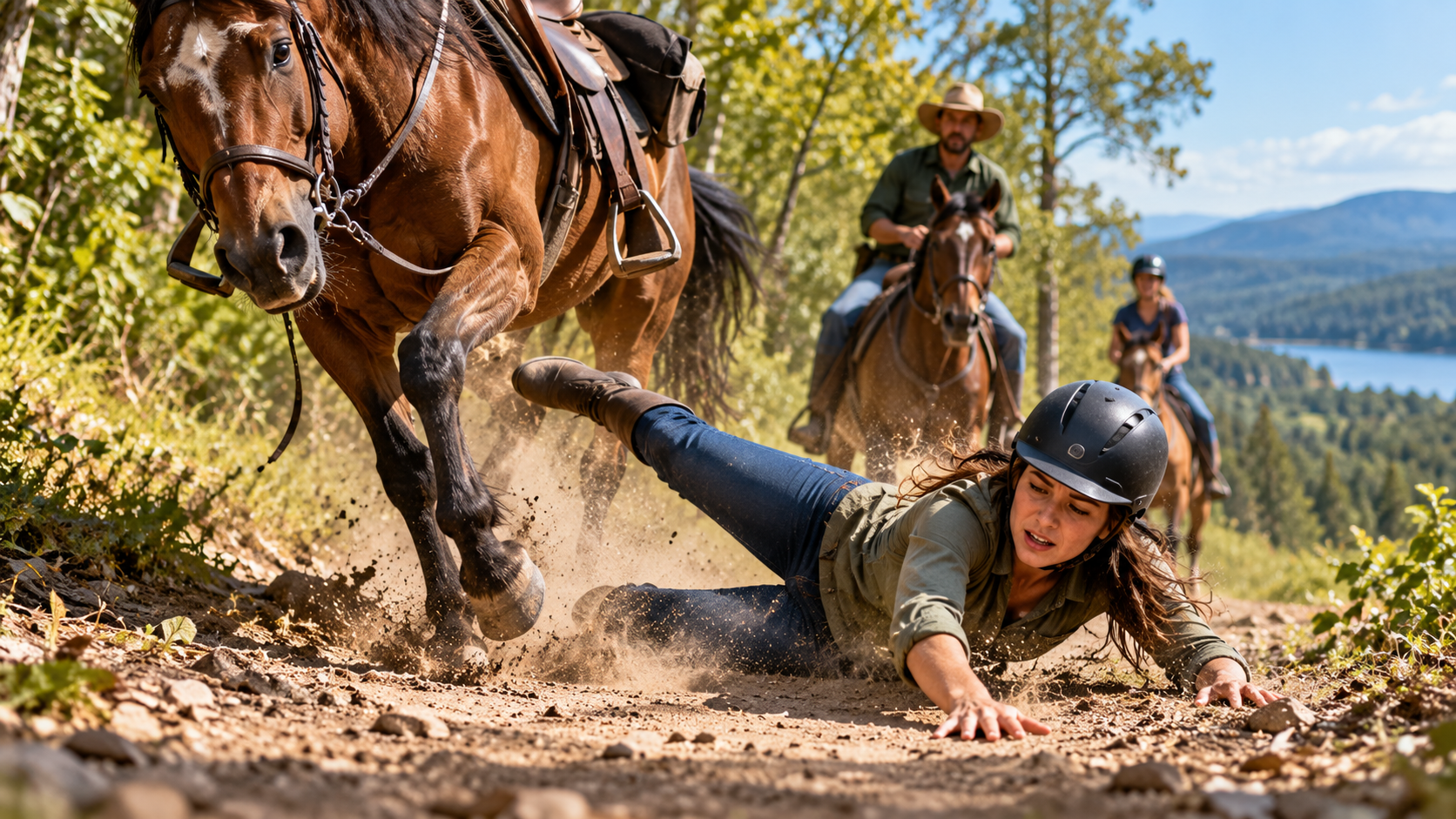
Guided trail rides are a summer staple across upstate New York, from the Adirondacks to the Catskills and the Hudson Valley. Most stables advertise them to beginners: no experience needed, a guide leads the way, and the horses are “gentle.” But when a stable cuts corners on supervision, horse selection, or basic safety, a relaxing afternoon can end with a fall that causes fractures, head trauma, and months of recovery.
Many injured riders assume they have no case because they signed a waiver or because horseback riding is risky. That is not always true. New York law protects stables from the ordinary risks of riding, but it does not protect them from their own carelessness. The Cakani Law Firm recently secured a $500,000 settlement for a rider injured on a guided trail ride in upstate New York.
How Trail Ride Accidents Happen
In our experience, serious trail ride injuries rarely come from pure bad luck. They usually trace back to decisions the stable made before the rider ever got in the saddle:
- Too few guides: One guide leading a long line of riders cannot watch, help, or stop everyone at the back.
- Wrong horse for the rider: A first-time rider may be placed on a spirited or unpredictable horse.
- Loose or unmanned horses: Riderless horses allowed to travel with the group can spook or crowd other mounts.
- Ignoring a rider in trouble: A frightened rider asks to stop or dismount, but the guide keeps the group moving.
- No instruction: Riders are sent out without being shown how to steer, stop, or hold on.
- No helmets offered: Helmets are an important precaution against head injuries.
- Missing safety warnings: New York requires certain farm and agritourism operations to post visitor warnings; some do not.
The Injuries Can Be Life-Changing
A fall from a horse drops a rider several feet onto hard ground, often while the horse is moving. Common injuries include:
- Fractures of the wrist, arm, shoulder, ribs, pelvis, or spine
- Traumatic brain injury and concussion, especially when no helmet was worn
- Neck and back injuries, including herniated discs
- Injuries from being stepped on or kicked after the fall
These are not minor injuries. Many riders face a hospital stay, weeks in a rehabilitation facility, ongoing physical therapy, and time away from work. Brain injuries can bring lasting memory problems, headaches, anxiety, and changes in mood that affect the whole family.
Case Result: $500,000 Settlement for an Injured Trail Rider
Our client, a working mother in her early forties, booked a guided trail ride at a riding stable in upstate New York while on a summer trip. She was an inexperienced rider. She alleged that the stable sent her out with too little guidance and supervision, that riderless horses were allowed to move with the group, and that her requests to stop and get off the horse went unheeded. She was thrown to the ground.
She suffered fractures and a traumatic brain injury. She spent a week in the hospital, then about a month in an inpatient rehabilitation facility, followed by ongoing outpatient therapy. The injuries kept her out of work.
The stable and its insurer denied responsibility, arguing that falling off a horse is an inherent risk of riding. We filed suit in New York Supreme Court and built the case through discovery: we retained an equine safety expert, deposed witnesses, and went to court to compel the stable to identify the trail guide on duty. The defense’s early offer was a fraction of the case’s value. We held firm, and the case settled for $500,000.
“Assumption of Risk” Is Not the End of the Story
Stables almost always raise the same defense: the rider assumed the risk. Under New York’s assumption-of-risk doctrine, a person who chooses a recreational activity accepts the risks that are inherent in it, such as a horse acting unexpectedly.
But a rider does not assume risks that the stable creates or unreasonably increases. Inadequate staffing, a poorly matched horse, loose horses on the trail, no instruction, and ignoring a rider’s request to stop can all fall outside the doctrine. A signed waiver may not end the case either; New York limits how far recreational businesses can contract away liability for their own negligence.
Whether a claim is viable depends on the specific facts, which is why an early investigation matters.
What to Do After a Horseback Riding Injury
- Get medical care right away, and follow up even if symptoms seem mild. Head injuries often show up later.
- Report the fall to the stable and ask for a copy of any incident report.
- Photograph the trail, the horse, your equipment, and your injuries.
- Get names and contact details for the guide and other riders.
- Keep your booking confirmation, receipts, and any waiver you signed.
- Talk to a personal injury lawyer before giving a recorded statement to the stable’s insurer.
Talk to The Cakani Law Firm
If you or a family member was hurt on a trail ride, at a riding stable, or at any recreational business in New York, The Cakani Law Firm, P.C. can review your case at no cost. We handle personal injury cases on a contingency basis, so you pay no fee unless we recover for you.
Call (212) 962-0500 or visit our offices in White Plains, Manhattan, or Englewood Cliffs, NJ.
Attorney Advertising. Prior results do not guarantee a similar outcome. Every case is different and depends on its own facts. This post is for general information only and is not legal advice. Reading this article does not create an attorney-client relationship.

