
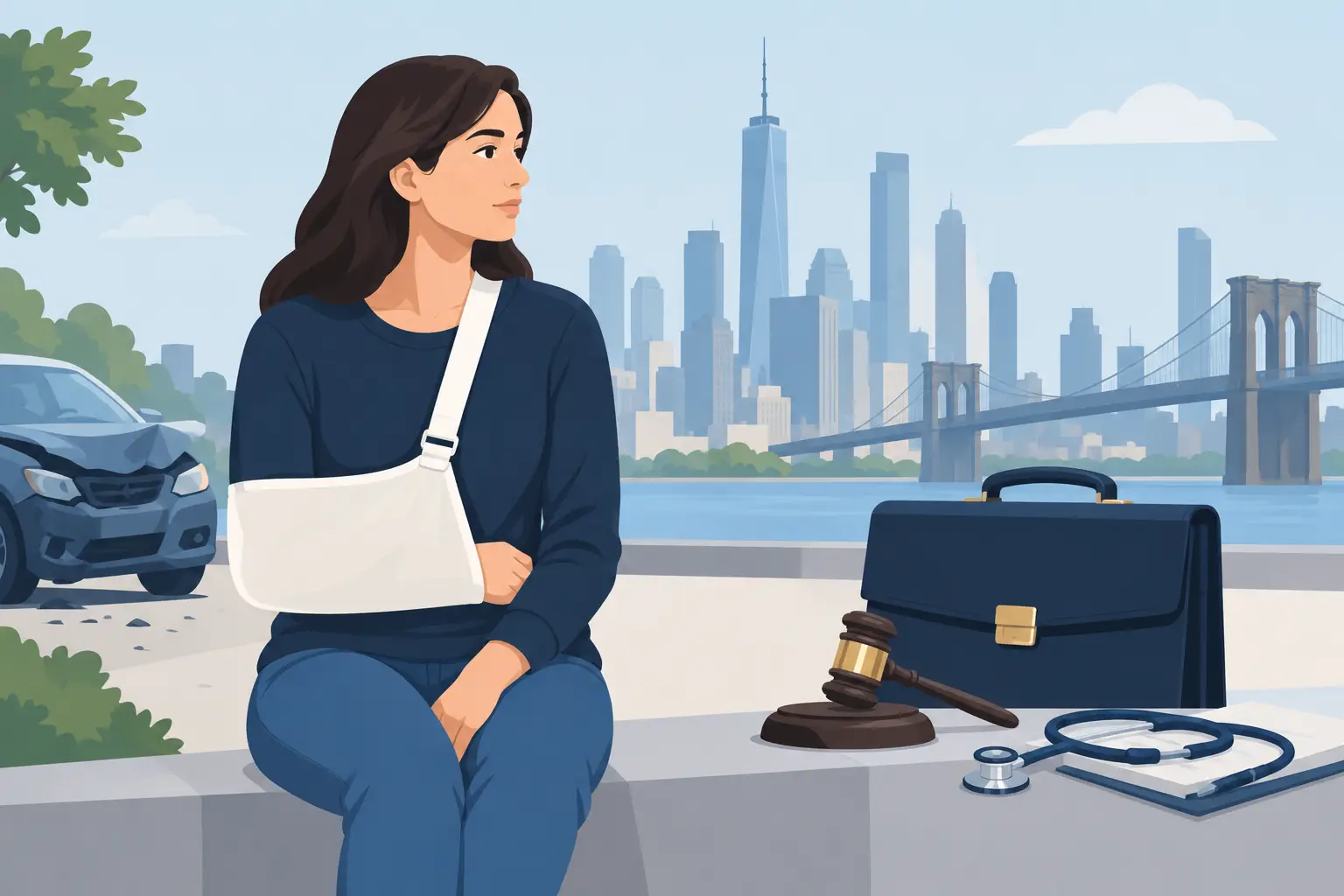
An accident can change the terms of your life in seconds. One moment, you are driving to work, crossing a street, carrying materials on a job site, or walking through a building. Then comes a serious personal injury, medical treatment, missed paychecks, and an insurance company asking questions before you have had a chance to understand what happened.
For injured people and families in New York and New Jersey, the first days after an accident can shape the strength of a legal claim. The right steps cannot erase the injury, but they can preserve evidence, protect your options, and put you in a stronger position to demand the compensation you need.
What Counts as a Personal Injury Claim?
A personal injury claim arises when another person, business, property owner, contractor, driver, or other party may be legally responsible for causing harm. The injury may result from carelessness, unsafe conditions, a failure to follow safety rules, or conduct that put others at unreasonable risk.
These cases are not limited to car crashes. Serious claims often involve construction falls, falling objects, defective ladders or scaffolds, truck collisions, pedestrian accidents, dangerous property conditions, medical errors, burns, rideshare crashes, and wrongful death. What connects them is the harm done to a person and the question of who should be held accountable.
The answer is not always obvious at the scene. A construction worker may assume workers’ compensation is the only option, only to learn that a property owner, general contractor, equipment company, or subcontractor played a role. A driver may be blamed for a crash even though phone records, surveillance footage, vehicle data, or witness statements tell a different story. That is why a quick, serious investigation matters.
The First Moves That Can Protect Your Claim
Your health comes first. Accept emergency care when needed, follow up with qualified medical providers, and do not minimize symptoms just because you need to get back to work. Pain, dizziness, numbness, headaches, and reduced mobility can develop or worsen after the initial shock wears off. Medical records also create a contemporaneous account of what the accident did to your body.
If you can do so safely, preserve what you can. Take photos of the location, vehicle damage, unsafe condition, visible injuries, equipment, and anything else that may change or disappear. Keep the clothes and shoes you were wearing if they are relevant to the accident. Save messages, emails, incident reports, medical bills, discharge paperwork, and receipts for out-of-pocket expenses.
Report the incident through the appropriate channel. This could mean calling police after a vehicle collision, notifying a supervisor after a workplace accident, or reporting a fall to a property manager. Be accurate, but do not speculate or accept blame. A rushed statement made while you are hurt and disoriented can be used against you later.
You should also be careful with insurance adjusters. Their questions may sound routine, but recorded statements and early settlement offers are often designed to limit what the insurer pays. You are not required to guess about fault, provide a broad medical authorization, or accept an offer before you understand the full extent of your injuries.
Why Serious Injury Cases Require More Than a Quick Settlement
A settlement offer can arrive before surgery is recommended, before a specialist gives a prognosis, or before you know whether you can return to your job. That offer may cover a short period of treatment while ignoring future care, lost earning capacity, chronic pain, or the effect the injury will have on your family.
The value of a claim depends on the facts. Severity of injury matters, but so do liability evidence, available insurance coverage, future medical needs, lost income, and the way the injury has changed everyday life. A broken bone that heals fully does not present the same damages as a spinal injury that limits a laborer’s ability to work for years. Neither should be dismissed, but the legal strategy must match the stakes.
In high-severity cases, proving the full loss can require substantial investment. Medical experts may explain future treatment needs and permanent limitations. Safety professionals may examine a dangerous worksite. Accident reconstruction experts may determine how a crash occurred. Economists and vocational experts may calculate the income a person can no longer earn. Insurers and corporate defendants bring their own experts. An injured person needs a legal team prepared to meet that challenge.
Personal Injury Claims After Work Accidents
Workplace injuries raise special questions in New York and New Jersey. Workers’ compensation may provide certain benefits regardless of fault, but those benefits can be limited. They may not fully address the losses caused by a life-altering injury, and they generally do not compensate pain and suffering in the way a personal injury lawsuit can.
A separate third-party claim may exist when someone other than the employer contributed to the accident. On construction sites, possible responsible parties can include general contractors, property owners, subcontractors, equipment manufacturers, and outside vendors. Falls from heights, scaffold collapses, ladder failures, defective tools, electrocutions, and falling-object injuries demand a close review of contracts, safety practices, site control, and applicable labor protections.
Do not assume that being paid in cash, being classified as an independent contractor, or lacking immigration paperwork means you have no rights. The facts matter, and legal protections may apply even when an employer or contractor tries to avoid responsibility.
Fault Is Important, But It Is Not Always the End of the Case
Many injured people hesitate to speak with a lawyer because they believe they may have been partly at fault. Perhaps you were speeding, did not see a warning sign, or were distracted when the accident happened. Those facts can matter, but they do not automatically erase a claim.
New York and New Jersey use comparative fault principles, although the rules differ. The practical point is that a careful review is necessary before anyone decides you cannot recover. A property owner may have ignored a hazardous condition for months. A truck driver may have violated safety rules. A contractor may have failed to provide required protection. More than one party can bear responsibility for the same event.
The same is true when an insurer says there is no coverage or a defendant says the injury was preexisting. Those arguments require evidence, not surrender. A prior condition does not give another party permission to make it worse.
When to Speak With a Personal Injury Lawyer
It is wise to seek a legal evaluation as soon as possible after a serious accident, especially when there is hospitalization, surgery, a death, a disputed version of events, a commercial vehicle, a construction site, or pressure from an insurer. Evidence can disappear quickly. Camera footage may be overwritten, vehicles repaired, job sites altered, and witnesses harder to locate.
A focused personal injury firm should evaluate the facts, identify potentially responsible parties, preserve evidence, calculate the real scope of damages, and handle communications with insurers. It should also be willing to take a case to trial when a fair resolution is not offered.
The Cakani Law Firm, P.C. represents injured people and grieving families across New York and New Jersey in serious, complex claims. The firm has recovered more than $300 million for clients and invests in the experts and preparation needed to confront powerful insurers, contractors, property owners, and corporations. Clients pay no attorney fees unless the firm wins.
Your Next Step Is About Protecting Your Future
A legal claim cannot undo a catastrophic crash, a preventable fall, or the loss of someone you love. It can provide the financial support needed for treatment, household stability, lost income, and a future that looks different than it did before the accident.
Do not let an insurance company decide what your injury is worth while you are still trying to heal. Get clear answers, preserve the evidence, and make decisions with the full impact of the accident in view. You deserve the chance to recover and move forward with a team prepared to fight for you.

