
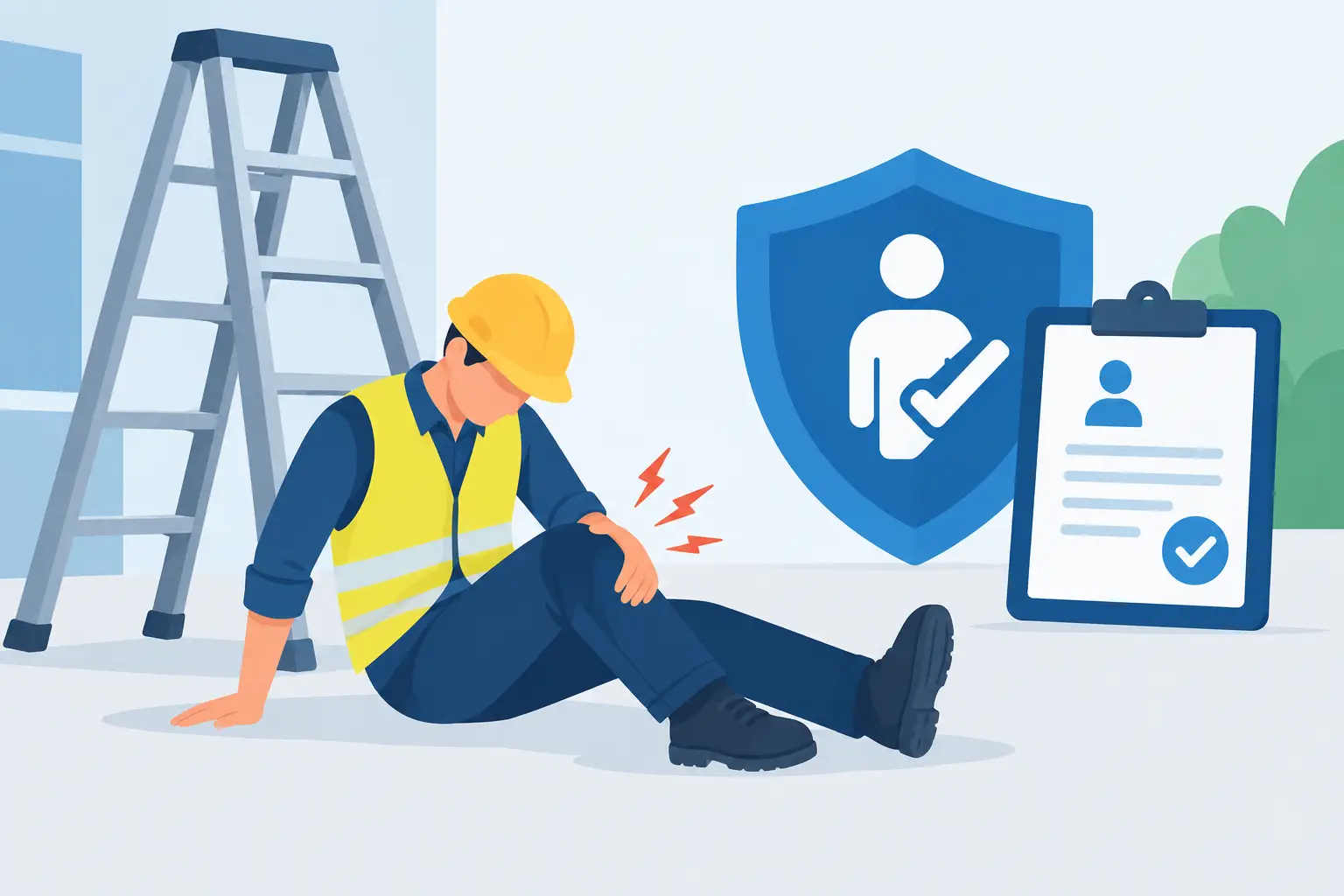
A ladder fall can change a working person’s life in seconds. One missed rung, a ladder that shifts, a defective lock, or an unsafe placement can leave someone facing surgery, months without a paycheck, and pressure from insurers before they understand their options. A ladder accident compensation claim can be a path to recover the financial support needed after a serious fall, but the strength of that claim often depends on what happens in the days and weeks afterward.
For injured workers and families in New York and New Jersey, the central question is not simply whether a fall occurred. It is why it occurred, who controlled the worksite or ladder, and whether a property owner, contractor, employer, manufacturer, or another party failed to meet its responsibilities.
What Compensation May Be Available After a Ladder Fall
A serious ladder accident creates losses that reach far beyond the emergency room. A personal injury claim may seek compensation for past and future medical care, rehabilitation, lost wages, reduced earning capacity, pain and suffering, and the day-to-day limitations caused by the injury. When a fall results in permanent disability, traumatic brain injury, spinal damage, amputation, or wrongful death, the stakes are even higher.
Workers’ compensation may provide certain benefits when the injury happened on the job. It can help with medical treatment and partial wage replacement, but it usually does not compensate an injured worker for pain and suffering. It also may not account for the full value of a career-ending injury.
That is why a careful investigation matters. A worker may have a separate claim against a negligent third party, such as a general contractor, property owner, subcontractor, equipment rental company, or ladder manufacturer. These claims can provide compensation beyond workers’ compensation benefits. The answer depends on the facts, the work arrangement, and the state where the accident occurred.
Why Ladder Accident Claims Are Often More Complex Than They Appear
Insurance companies may try to reduce a ladder accident to a simple story: the worker was careless. That conclusion is often made before anyone has inspected the ladder, reviewed worksite conditions, or spoken with witnesses.
The real cause can be much more complicated. Was the ladder the right height and type for the job? Were its feet worn or missing? Did someone place it on uneven debris, wet flooring, loose soil, or an unprotected edge? Was it unsecured when it should have been tied off or held? Did the worker have the equipment necessary to perform the task safely? Were overhead hazards, rushing schedules, poor lighting, or inadequate supervision involved?
The ladder itself can be critical evidence. A bent rail, damaged rung, failed spreader bar, broken locking mechanism, missing warning label, or design defect may point to a party other than the injured worker. Yet ladders are frequently moved, repaired, discarded, or returned to a rental company shortly after an accident. Once that happens, proving what caused the fall becomes harder.
New York Construction Ladder Falls
New York has powerful protections for workers injured in elevation-related construction accidents. Under Labor Law Section 240(1), often called the Scaffold Law, owners and general contractors can face liability when a worker is injured because proper safety devices were not provided or did not provide adequate protection from an elevation-related risk.
A ladder can qualify as a safety device under this law. A fall from a ladder, or an injury caused by an object falling from above, may support a claim when the accident arose from the type of height-related danger the law addresses. But the facts still matter. The work being performed, the condition of the ladder, the available safety equipment, and each defendant’s role must be examined closely.
Other New York Labor Law provisions, including Sections 241(6) and 200, may also apply depending on the construction activity and dangerous condition involved. These cases demand early investigation and a litigation team prepared to take on property owners, developers, contractors, and their insurers.
New Jersey Ladder Falls
New Jersey does not have a direct equivalent to New York’s Scaffold Law. Injured workers may still have strong claims based on negligence, defective equipment, unsafe premises, or the failure of a contractor or property owner to maintain a safe work environment.
A worker may receive workers’ compensation from an employer while pursuing a third-party claim against another responsible business or individual. For example, a subcontractor’s employee injured by a defective ladder supplied by a general contractor may have a different legal path than an employee hurt by equipment owned and maintained solely by their employer. Those distinctions should be reviewed before anyone accepts an insurer’s version of events.
Steps That Can Protect Your Claim
Medical care comes first. Tell treating providers exactly how the fall happened and report every symptom, including head pain, numbness, dizziness, neck pain, and back pain. Some serious injuries become clearer over time, and incomplete medical records can give an insurer room to dispute the severity of the harm.
If you are able, take these steps as soon as possible:
- Report the accident to a supervisor, site manager, or employer and ask for a written incident report.
- Photograph the ladder, its labels, damaged parts, the ground or floor beneath it, nearby debris, and the overall work area.
- Get the names and contact information of witnesses, including coworkers who saw conditions before the fall.
- Preserve work orders, text messages, daily logs, safety instructions, and photographs showing the work underway.
- Avoid giving a recorded statement or signing broad medical authorizations for an insurance company before getting legal advice.
- Speak with an experienced injury attorney before the ladder is discarded, altered, or taken away.
You do not need to conduct the investigation alone. In a serious case, the right legal team may move quickly to preserve the ladder, inspect the scene, identify every contractor involved, obtain surveillance footage, and work with safety, engineering, medical, and economic experts. That investment can make the difference between a claim built on assumptions and one supported by evidence.
Common Defenses and Why They Should Not End the Conversation
Defendants often argue that the injured person used the ladder improperly, climbed too high, failed to follow instructions, or should have recognized the danger. Sometimes a worker’s conduct is relevant. It is not, however, the end of the analysis.
On a busy construction site, workers may be given inadequate equipment, conflicting directions, impossible deadlines, or no practical alternative to performing the job under unsafe conditions. A company cannot escape responsibility simply by pointing to a worker who was trying to get the job done. In New York, the legal rules governing construction elevation accidents can be especially significant. In New Jersey, evidence of comparative fault may affect recovery, but it does not automatically eliminate a valid claim.
The same is true when an injured person is not a construction worker. A tenant, delivery driver, shopper, maintenance worker, or guest who falls from a ladder on someone else’s property may have a premises-liability claim if dangerous conditions, defective equipment, or negligent maintenance contributed to the incident.
The Value of a Thorough Case Evaluation
The value of a ladder accident case cannot be responsibly calculated from a diagnosis alone. It depends on liability evidence, the severity and permanence of the injury, future treatment needs, lost income, available insurance coverage, and the impact the injury has had on the person’s life and family.
A broken wrist may heal with limited long-term consequences. A fall causing a spinal fusion, brain injury, chronic pain, or inability to return to construction work is different. A fair recovery must account for the future, not just the bills already in hand.
The Cakani Law Firm, P.C. represents injured people and families in New York and New Jersey in complex, high-stakes accident cases. The firm has recovered more than $300 million for clients and invests in the experts and evidence serious construction and workplace cases require. There are no attorney fees unless a recovery is obtained.
Do not let a damaged ladder disappear or let an insurance company rush you into a decision while you are still healing. A prompt legal evaluation can protect evidence, clarify your options, and give you room to focus on the work that matters most: recovering and moving forward.

