
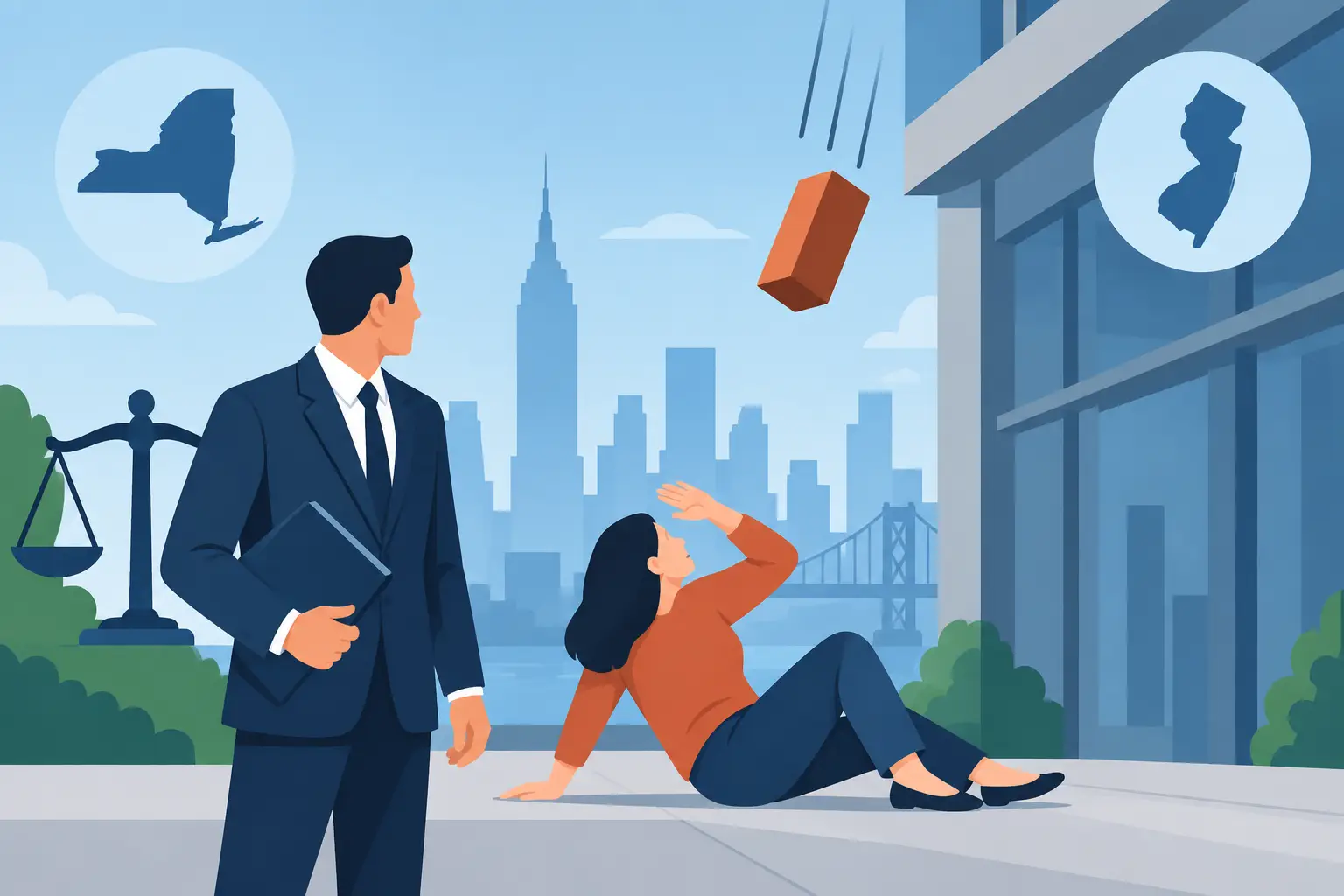
A falling object can turn an ordinary workday, sidewalk walk, or visit to a building into a medical emergency in seconds. A falling object injury lawsuit may provide a path to compensation when a contractor, property owner, employer, or another party failed to keep people safe. For seriously injured New Yorkers and New Jersey residents, the question is not just who dropped the object. It is whether someone had a duty to prevent the danger before it struck.
Falling-object claims can be complex, especially on construction sites where multiple contractors, subcontractors, suppliers, and property owners may share responsibility. The injury may be obvious. Proving why it happened, who controlled the work, and what safety measures were missing requires a fast, disciplined investigation.
When a Falling Object Injury Lawsuit May Be Available
A valid claim often begins with a preventable failure. Tools should be secured. Materials should be stacked safely. Work areas below overhead activity should be barricaded or protected. Workers should have appropriate safety equipment and training. Building owners and managers should address loose fixtures, deteriorating facades, and unsafe conditions before they hurt someone.
The facts matter. A hammer that falls from scaffolding raises different legal issues than merchandise falling from a retail shelf, a ceiling tile striking a tenant, or construction debris hitting a pedestrian outside a work zone. Yet each case comes back to a direct question: did a person or company fail to use reasonable care?
On a construction site, a falling object may result from unsecured tools, overloaded hoists, unstable materials, inadequate netting, poor housekeeping, or rushed work performed above others. On commercial or residential property, the cause could be a poorly maintained ceiling, falling signage, loose masonry, defective shelving, or an unsafe renovation project.
Even if you were working when you were injured, you may have rights beyond workers’ compensation. In many cases, an injured worker can pursue a separate claim against a negligent general contractor, property owner, subcontractor, equipment company, or other third party. The available claims depend on the site, the contracts, who supervised the work, and the safety rules that applied.
Construction Accidents Have Powerful Legal Protections
New York construction workers may have protections that go well beyond ordinary negligence law. New York Labor Law Section 240(1), often called the Scaffold Law, can apply when a worker is injured by an elevation-related risk, including an object that fell because it was not properly secured or required a safety device. This law is fact-specific, but it can be a critical protection for workers hurt by falling materials, tools, pipes, equipment, or debris.
New York Labor Law Section 241(6) may also apply when a construction accident resulted from a violation of a specific Industrial Code safety rule. Those regulations can address hazards involving overhead work, material storage, debris, protection from falling objects, and more. These claims require careful legal and factual analysis. A general statement that a worksite was unsafe is not enough.
New Jersey does not use New York’s Scaffold Law, but injured workers can still bring substantial third-party claims when another company or property owner created or failed to correct a dangerous condition. A contractor’s safety plan, site rules, inspection records, and Occupational Safety and Health Administration findings may all become important evidence.
The legal framework differs by state, but the need for a thorough investigation does not. Powerful defendants often argue that the incident was unavoidable or that the injured person caused it. The evidence must tell the real story.
Evidence Can Disappear Quickly
After a falling-object accident, the scene may be cleaned up before an injured person leaves the hospital. Materials are moved. Tools disappear. Work resumes. Witnesses become harder to locate, and companies may repair the dangerous condition without preserving what caused the injury.
That is why prompt action can make a meaningful difference. Photographs and video of the scene, the object involved, protective measures that were missing, warning signs, and the surrounding work area can be invaluable. So can incident reports, witness names, medical records, job logs, safety meeting records, inspection reports, subcontractor agreements, and surveillance footage.
In construction cases, the right legal team may need to examine site plans, daily reports, contracts, equipment specifications, and applicable safety regulations. Experts may be needed to explain how the object should have been secured, whether the work zone was properly protected, and how the injury will affect the victim’s ability to work and live independently.
This is not paperwork for its own sake. It is how an injured person counters the defense argument that no one could have prevented the accident.
What Compensation Can Cover
A head injury, spinal trauma, crushed limb, eye injury, broken bones, or internal injury can change a family’s financial future. Medical bills are only the beginning. A falling object can leave someone unable to return to physical work, unable to care for children, or unable to sleep without pain.
Depending on the circumstances, compensation may include past and future medical care, lost wages, reduced earning capacity, rehabilitation, home or vehicle modifications, pain and suffering, and loss of enjoyment of life. When a falling object causes a fatal injury, surviving family members may have a wrongful death claim.
The value of a case depends on the strength of the liability evidence, the severity and permanence of the injuries, available insurance coverage, and the economic losses involved. No responsible lawyer should promise a result before investigating. But a serious injury deserves a serious evaluation, particularly when an insurer tries to minimize the long-term consequences.
Be Careful With Early Insurance Calls
Insurance representatives may contact you quickly after an accident. They may sound concerned, but their job is to protect the insurer’s financial interests. A recorded statement given while you are in pain, medicated, or still learning the extent of your injuries can later be used against you.
You do not need to guess about fault or accept an early settlement offer to be cooperative. Seek medical attention, follow your doctors’ instructions, keep records of expenses and missed work, and avoid posting details of the accident or your recovery on social media. If possible, preserve the clothing, helmet, tools, or other items involved in the incident without altering them.
Do not assume that a workers’ compensation claim or a building owner’s insurance payment resolves every legal issue. Workers’ compensation may provide limited benefits, but it does not typically compensate an injured worker for pain and suffering. A third-party lawsuit can be essential when someone other than the employer bears legal responsibility.
Deadlines Matter in New York and New Jersey
The time limit for filing a falling object injury lawsuit is not the same in every case. It can change depending on where the accident happened, who is responsible, whether a public entity is involved, and the kind of claim being brought. Claims against a city, public authority, school district, or other government body may require a notice of claim on a much shorter timeline.
Waiting also creates practical problems. The longer evidence remains in the control of contractors, insurers, and property owners, the greater the risk that it is lost, overwritten, or explained away. A prompt legal review helps protect both your legal rights and the proof needed to enforce them.
The Cakani Law Firm, P.C. represents people facing high-stakes injury claims in New York and New Jersey. We understand that a falling-object accident is not a minor inconvenience when it has taken away your income, your mobility, or your sense of security. Complex cases demand resources, expert analysis, and a willingness to confront companies that refuse to take responsibility.
If a falling object injured you or someone you love, getting answers early can protect your options. The next step does not have to be an argument with an insurance company. It can be a focused conversation about what happened, what evidence remains, and what it may take to help you move forward.

