
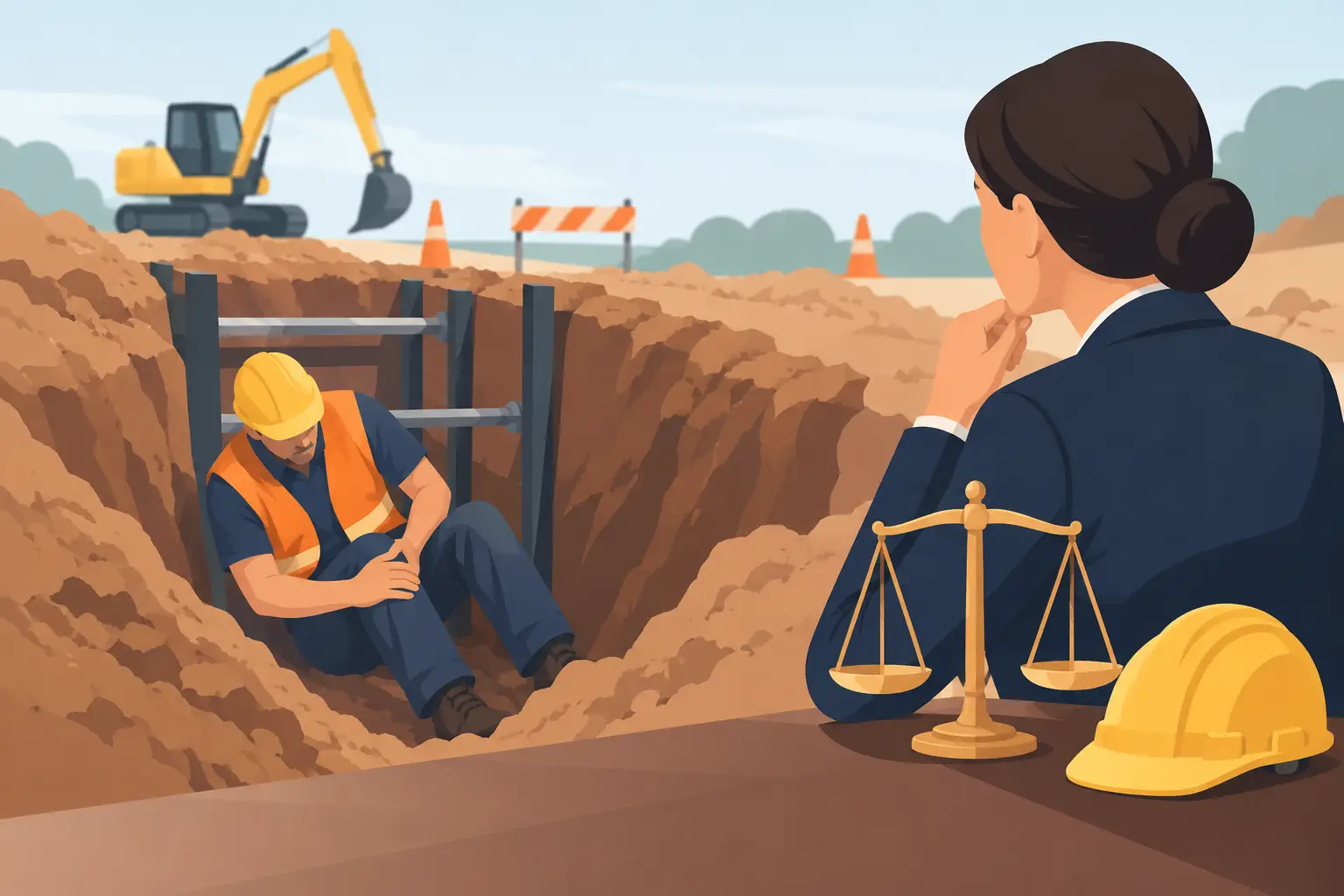
A trench collapse can turn an ordinary workday into a fight for survival in seconds. If you or someone you love was buried, crushed, struck by collapsing soil, or harmed during a rescue, a trench collapse injury attorney can help identify who created the danger and pursue the full compensation the injury demands.
These are not minor job-site accidents. A cave-in can leave a worker with spinal cord damage, traumatic brain injury, broken bones, internal injuries, crush syndrome, amputations, permanent nerve damage, or the loss of a family member. The medical crisis is immediate, but so are the legal issues. Contractors and insurance companies may move quickly to control the story, repair the site, or claim the worker caused the incident. Evidence can disappear before an injured worker has even left the hospital.
Why trench collapses happen
Excavation work is dangerous because soil is unpredictable. A trench wall that appeared stable in the morning can fail after rain, vibration from machinery, nearby traffic, loose fill, a water leak, or changes in the load placed near the edge. But unpredictable ground conditions do not excuse preventable safety failures.
Federal and state safety rules require careful planning before workers enter an excavation. Depending on the site and the work being performed, responsible parties may need to inspect the trench, classify the soil, provide a protective system such as sloping, shoring, or a trench box, keep heavy materials away from the edge, control water accumulation, and provide a safe way for workers to exit.
A collapse often points to a breakdown in those basic protections. The question is not simply whether the trench gave way. The question is whether a property owner, general contractor, excavation contractor, subcontractor, or equipment company ignored a condition that put workers in harm’s way.
What a trench collapse injury attorney investigates
A serious trench case cannot be built from a brief accident report alone. The responsible companies may have contracts, site logs, inspection records, safety plans, photographs, text messages, and internal communications that reveal what they knew before the collapse. An attorney must move quickly to preserve that evidence.
At The Cakani Law Firm, P.C., high-severity construction cases are prepared for the fight they require. That can mean working with construction-safety professionals, engineers, accident reconstruction experts, and medical specialists to show how the collapse occurred and how the injury will affect the client’s future.
A thorough investigation may examine whether the trench had an adequate protective system, whether a competent person conducted required inspections, whether spoil piles or equipment were placed too close to the edge, and whether water or changing soil conditions made the excavation unsafe. It can also address whether workers received meaningful training, whether the crew was pressured to rush, and whether a prior warning was ignored.
This work matters because powerful defendants rarely volunteer damaging evidence. A strong claim must be supported by facts, records, expert analysis, and a clear account of the human loss caused by the safety failure.
Workers’ compensation may not be the whole case
Many injured workers assume workers’ compensation is their only option. It may provide medical benefits and a portion of lost wages, but it often falls far short of the true cost of a life-changing injury. It generally does not compensate an injured worker for pain and suffering.
Whether an additional personal injury claim exists depends on the facts. A worker may have a claim against a party other than a direct employer, such as a property owner, general contractor, another subcontractor, an equipment manufacturer, or a negligent driver who caused vibrations or a collision near the excavation. In some circumstances, a defective trench box, shoring system, machine, or safety device may also be part of the case.
New York construction law can provide important protections for workers, particularly when owners and contractors fail to provide a safe worksite or violate applicable safety requirements. New Jersey claims may involve different rules, including negligence claims against responsible third parties. The right legal strategy depends on where the incident occurred, the employment relationships on the site, the contracts in place, and the evidence of control over the work.
That is why a quick consultation matters. A family should not accept an insurer’s explanation of the accident before an experienced construction injury team has reviewed the facts.
Compensation should reflect the full damage
A trench collapse injury can change every part of a person’s life. The claim should account for more than the first emergency room bill. It may include past and future medical care, rehabilitation, surgery, medications, home modifications, lost income, diminished earning capacity, pain and suffering, and the loss of the activities and relationships that made life feel normal.
For a fatal trench collapse, surviving family members may be able to bring a wrongful death claim. Financial losses can include funeral expenses, medical expenses, lost earnings, and the value of support and services the person would have provided. No legal action can undo that loss. It can, however, provide needed financial stability and hold the parties responsible for unsafe work accountable.
Insurance companies often focus on what they can pay today, not what the injury will cost over a lifetime. A worker who cannot return to physically demanding employment may need years of care and a different vocational path. Those losses must be documented carefully, not guessed at or minimized.
Steps to take after a trench collapse
The priority after a cave-in is medical care and recovery. If possible, though, taking a few early steps can protect a future claim:
- Report the incident and make sure the report accurately identifies the location, task, equipment, and people involved.
- Seek prompt medical treatment and follow through with recommended care, even if symptoms seem manageable at first.
- Save photographs, videos, work messages, contact information for witnesses, pay records, and any documents given to you by an employer or insurer.
- Do not sign a recorded statement, broad medical authorization, or settlement paperwork without understanding its effect.
- Speak with a trench collapse injury attorney before evidence is altered or key deadlines pass.
Do not worry if you were unable to take photos or gather records from the scene. Workers are often injured too severely to do anything but survive. An experienced legal team can take steps to preserve evidence, obtain records, and investigate the site.
Do not let blame shift to the injured worker
Construction defendants frequently argue that the worker should have recognized the danger, refused the assignment, or used a different method. That argument ignores the realities of a job site. Workers may be following instructions, relying on supervisors, facing pressure to finish the task, or lacking authority to stop work.
Even when a worker’s conduct becomes an issue, it does not automatically end a claim. The facts matter. So do the safety rules, the worksite hierarchy, the available equipment, and the decisions made by those responsible for planning and supervising the excavation.
A serious injury case deserves a law firm prepared to confront those defenses with evidence, expert testimony, and disciplined litigation. The Cakani Law Firm, P.C. represents injured people and grieving families throughout New York and New Jersey on a contingency-fee basis. There are no attorney fees unless we win.
After a trench collapse, you do not need to have every answer before asking for help. Preserve what you can, focus on medical care, and seek a prompt legal evaluation before the people responsible have the opportunity to rewrite what happened.

