
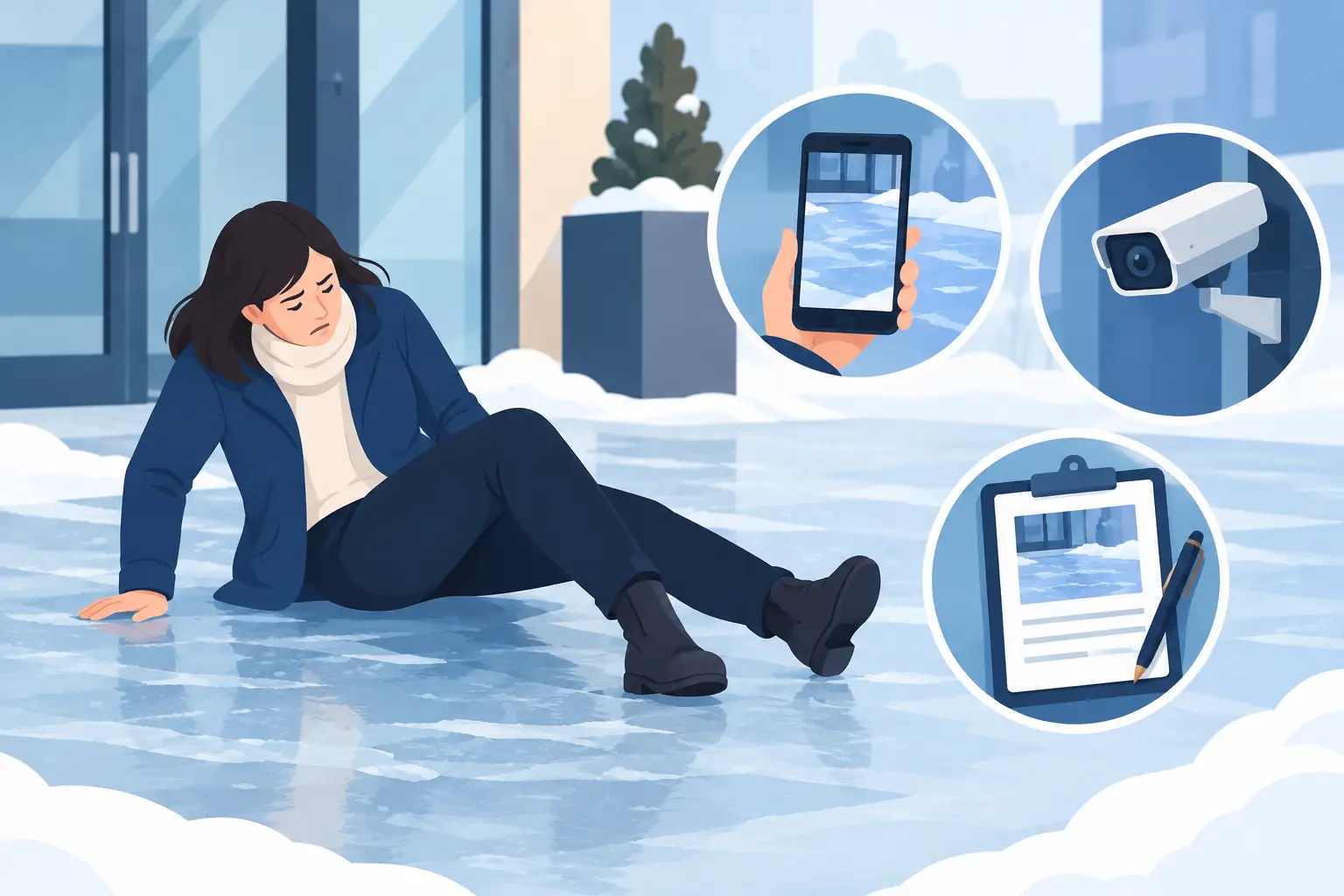
A patch of black ice outside an apartment building, store, job site, or parking garage can put someone in an ambulance within seconds. But an ice slip and fall claim is rarely decided by the fact that a person fell. The central question is usually whether a property owner, manager, tenant, contractor, or public entity had a legal duty to address a dangerous condition and failed to act reasonably.
That distinction matters when you are dealing with a broken bone, surgery, missed paychecks, and an insurance company looking for a reason to deny responsibility. Ice melts. Snow gets plowed. Surveillance video is recorded over. Strong claims are built quickly, with facts that show what the condition was, who controlled the property, and how long the danger existed.
What Must Be Proven in an Ice Slip and Fall Claim
Property owners do not automatically owe compensation every time someone falls during winter weather. New York and New Jersey premises-liability cases turn on notice, control, and reasonable care under the circumstances.
A successful claim often requires evidence that the responsible party created the icy condition, knew about it, or should have discovered it through reasonable inspections. A recurring drainage problem, for example, may leave water on a walkway that freezes overnight. If that problem has happened repeatedly and no one corrects it, the case may be much stronger than one involving a sudden, isolated patch of ice.
The condition of the property matters too. Was the walkway uneven? Did a broken gutter dump water onto a sidewalk? Was a roof drain leaking near an entrance? Was snow pushed into a location where melting runoff predictably refroze? These facts can establish that the hazard was not simply unavoidable winter weather.
Control is another major issue. The party named on a deed is not always the only party responsible. A commercial tenant may control the entrance, a management company may handle maintenance, and a snow-removal contractor may have obligations under its contract. In construction and workplace settings, the general contractor, subcontractors, or site owner may each have important roles. Identifying every responsible party can be critical, especially when the injuries are serious.
Evidence Can Disappear Before the Pain Does
After an ice fall, people often focus on getting medical help. They should. But if you can do so safely, or if a family member can help, preserve the scene as soon as possible. The goal is not to argue with a manager or decide fault at the scene. It is to capture what will no longer be visible a day later.
Useful evidence may include:
- Photos and video of the ice, snow, slush, puddles, lighting, walkways, stairs, drains, and warning signs
- The exact address and location of the fall, including the entrance, parking space, sidewalk section, or stairway involved
- Names and contact information for witnesses, employees, security personnel, or coworkers
- Incident reports, complaints made to management, and any response you receive
- Clothing and footwear from the day of the fall, particularly if an insurer later questions traction or visibility
- Medical records documenting the injury, pain, limitations, and treatment recommended by your doctors
Weather records can help establish when a storm ended, how temperatures changed, and whether refreezing was foreseeable. They are not the whole case. A weather report does not show whether a property owner inspected the premises, salted an entrance, repaired a drainage defect, or ignored a hazardous condition reported by others.
Video can be especially valuable. Many residential buildings, stores, garages, and worksites have cameras, but footage may be automatically deleted within days or weeks. A prompt request to preserve surveillance video can make a major difference. The same is true for maintenance logs, snow-removal contracts, work orders, inspection records, and communications between a property manager and its vendors.
Timing and Winter Storm Defenses
Insurance companies and property owners often point to an active storm and argue that removal efforts were not yet required. In New York, the so-called storm-in-progress doctrine may limit liability where precipitation is actively falling and the owner has not had a reasonable opportunity to clear it. That defense is not automatic.
It may not explain a hazard caused by old snow piles, poor drainage, a leaking gutter, defective pavement, or ice that remained long after the storm ended. The timing of the fall, the nature of the precipitation, the location of the ice, and the maintenance history all deserve close review.
New Jersey cases also require a fact-specific analysis of whether a commercial property owner acted reasonably under the conditions. A property owner cannot rely on winter weather as a blanket excuse while ignoring a known danger at a heavily used entrance or walkway.
The details can be difficult to reconstruct later. A legal team may use photographs, witnesses, weather data, maintenance documents, site inspections, and expert analysis to establish how the condition formed and whether reasonable steps could have prevented the fall.
Do Not Let an Insurer Rewrite What Happened
After a fall, you may be asked for a recorded statement or offered a quick settlement. The offer may arrive before you know whether an injury requires surgery, physical therapy, injections, or time away from work. Accepting money too early can leave you responsible for medical costs and lost income that appear later.
Be careful with statements suggesting that you were “fine,” that you did not see the ice, or that the fall was entirely your fault. Property owners and insurers may argue that the danger was open and obvious, that you wore improper shoes, or that you should have taken another route. Those arguments do not automatically defeat a case. New York and New Jersey generally examine whether each party contributed to the incident and how responsibility should be allocated.
Your conduct can matter, but it does not erase a property owner’s duty to keep areas reasonably safe. A person should not have to choose between walking through a dangerous, unmaintained entrance and missing work, a medical appointment, or access to their own home.
Claims Against Cities and Public Entities Need Fast Attention
A fall on a public sidewalk, stairway, transit area, or government-owned property can involve special notice requirements and shorter deadlines. The rules vary based on the entity and location. Some New York municipal claims require prior written notice of a defect, while claims against public entities in New Jersey are governed by strict notice procedures that can require action within 90 days.
Do not assume a sidewalk is city-owned simply because it is public-facing. In many areas, an adjacent property owner may have maintenance duties. Do not assume the opposite either. Determining ownership and responsibility can require an immediate investigation.
Waiting can jeopardize a claim even when the injuries are devastating. A lawyer can evaluate the location, identify the proper parties, and take steps to preserve evidence before key deadlines pass.
The Value of a Serious Ice Fall Case
An ice fall can cause far more than a bruised wrist. Falls commonly result in fractured hips, torn ligaments, spinal injuries, traumatic brain injuries, shoulder damage, and injuries that end a worker’s ability to perform physical labor. The financial impact can include emergency care, surgery, rehabilitation, lost wages, reduced earning capacity, and the daily help a family may need during recovery.
The value of a claim depends on the severity and permanence of the injury, available insurance, lost income, the strength of the liability evidence, and the conduct of the responsible parties. No responsible lawyer should promise a particular result before investigating the facts. But a serious injury deserves a serious investigation, particularly when a powerful property owner, management company, or insurer is trying to minimize the harm.
The Cakani Law Firm, P.C. represents injured people and families in New York and New Jersey against the parties that should have kept their properties safe. We invest in the evidence, expert analysis, and litigation needed to confront difficult claims. There are no attorney fees unless we win.
If you or a loved one fell on ice, preserve what you can, get the medical care you need, and seek legal guidance before the trail goes cold. A careful review now can protect your ability to pursue the recovery your injury demands.

