
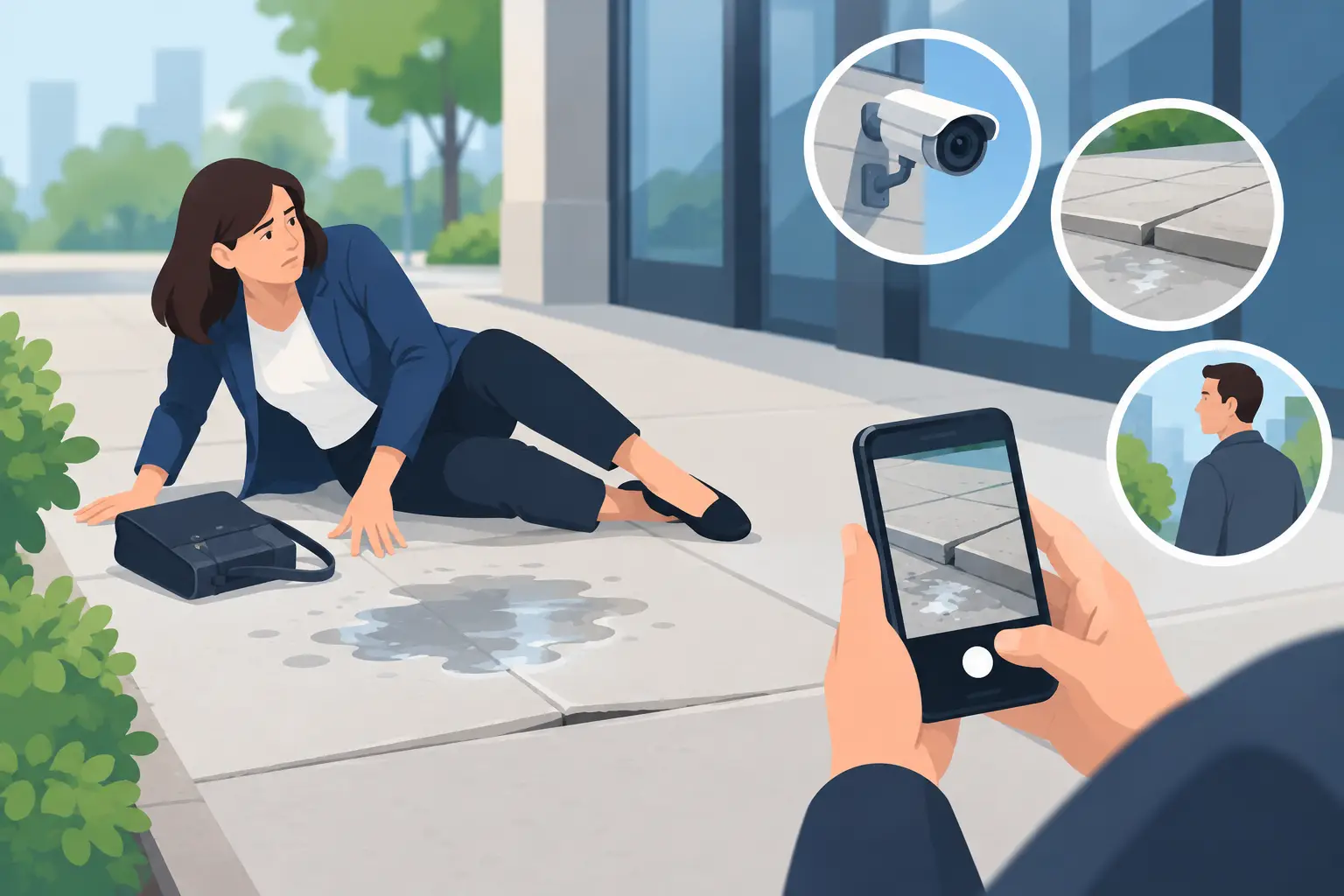
A broken sidewalk can be repaired before the ambulance bill arrives. A security camera can overwrite its footage within days. The witness who stopped to help may be impossible to find once the pain, appointments, and missed work take over. That is why sidewalk trip and fall evidence is often the difference between a claim that can be proven and one an insurer quickly tries to dismiss.
A fall is not automatically a legal case. To recover compensation, an injured person generally must show that a dangerous sidewalk condition caused the fall and that the responsible party knew, or should have known, about it. The right evidence tells that story clearly, before the defect, the scene, and the available proof disappear.
What Sidewalk Trip and Fall Evidence Must Prove
Insurance companies frequently defend sidewalk cases by claiming the defect was too small to matter, the injured person was not watching where they were going, or the condition appeared without warning. They may also argue that another property owner, contractor, or public agency was responsible.
Strong evidence addresses those arguments from the start. It should help establish four central points: there was a dangerous defect, it caused the fall, a specific party was responsible for the area, and that party had actual or constructive notice of the problem.
Actual notice means the owner or responsible agency knew about the defect, perhaps because someone complained, an employee saw it, or prior incidents occurred. Constructive notice can exist when the defect was visible and present long enough that a reasonable inspection should have found and fixed it. The details matter. A fresh crack after a utility excavation may raise different questions than a deep, weathered sidewalk flag that has been uneven for months.
Photograph the Defect Before It Changes
Photos and video taken immediately after a fall can be powerful because they capture the condition as it existed at the critical moment. Take wide shots showing the sidewalk in relation to the building, intersection, driveway, curb, street signs, and house numbers. Then take closer images of the raised slab, hole, crack, loose brick, broken grate, ice buildup, or other hazard.
Scale is essential. A photo without context can make a significant height difference look minor. If it is safe to do so, photograph the defect next to a ruler, tape measure, coin, shoe, or another recognizable object. Record video while slowly walking toward the area from the same direction you traveled. That can show whether the danger blended into shadows, was obscured by debris, or was difficult to see because of the sidewalk’s layout.
Do not rely on a single photo taken from above. Lighting, angle, and perspective can change the apparent severity of a defect. Capture the scene in daylight if the fall occurred at night, but also preserve evidence of the actual lighting conditions. If poor lighting contributed to the incident, photograph the area at approximately the same time of day.
If you are too injured to document the scene, ask a family member, friend, or trusted person to do it as soon as possible. Your health comes first. But waiting weeks can mean documenting a repair rather than the dangerous condition that caused the injury.
Preserve the Clothes and Shoes You Were Wearing
The footwear and clothing from the day of the fall may become evidence. Do not throw away the shoes, wash debris off them, or allow an insurer to take possession of them without legal guidance. The soles may show dirt, paint, gravel, or damage consistent with the scene. They can also answer predictable defense arguments that the shoes were unsafe or improperly fitted.
Place the items in a bag and set them aside. Take photographs of them first, including the soles. If your clothing was torn, dirty, or bloodied in the fall, preserve it as well.
Find Witnesses and Video Before They Are Gone
A neutral eyewitness can be especially valuable when the property owner disputes how the incident happened. Obtain names, phone numbers, email addresses, and, if possible, a short description of what each person saw. Did they see your foot catch on a raised sidewalk slab? Did they notice the defect before or after you fell? Have they seen other people trip there?
Nearby businesses, apartment buildings, doorbell cameras, delivery vehicles, and traffic cameras may have video. Many systems automatically erase footage in a short period. A prompt written request to preserve recordings can be critical. Do not assume a camera was pointed away from the sidewalk or that a business will voluntarily retain video without being asked.
If an employee, building superintendent, security guard, or property manager came to the scene, write down that person’s name and what they said. A statement such as “we have been meaning to fix that” can be significant, but even a simple record that the employee inspected the defect may matter later.
Report the Fall Accurately
When an incident occurs outside a store, apartment building, office, or construction site, ask for an incident report. Review it if you are given the chance, and request a copy. Be factual. Identify the location precisely and describe the condition that caused your fall. Avoid guessing about measurements or making statements that minimize your pain because you are embarrassed, shaken, or trying to be polite.
For falls on public sidewalks, a report to the appropriate city or municipal agency may create a record, but it does not replace a legal investigation. New York and New Jersey claims can involve city rules, local ordinances, adjacent property owners, utility companies, contractors, and public entities. Responsibility is not always obvious from the location alone.
In New York City, for example, adjacent property owners are often responsible for maintaining sidewalks, subject to important exceptions and fact-specific rules. When a public entity may be responsible, strict notice requirements and short deadlines can apply. New Jersey public entity claims can also require fast action. Waiting until medical treatment is complete before seeking legal advice can put critical rights at risk.
Medical Records Connect the Defect to the Injury
Seek medical care promptly after a serious fall. Adrenaline can conceal the extent of an injury, and symptoms may worsen over hours or days. An emergency department, urgent care provider, orthopedist, or primary care physician can document fractures, torn ligaments, head injuries, spinal trauma, nerve damage, and other conditions caused by the incident.
Tell your providers how the fall happened and identify the body parts that hurt. Medical records should accurately reflect the mechanism of injury. If you caught your foot on an uneven sidewalk, fell forward, struck your knee, and twisted your back, that sequence may help connect the dangerous condition to your injuries.
Follow treatment recommendations when possible, keep copies of bills and work-loss records, and document how the injury affects daily life. A fractured wrist may mean more than a cast. It can prevent a nurse from working, a laborer from lifting, or a parent from safely caring for a child. The full impact of the injury deserves to be documented.
Evidence of Notice Often Decides the Claim
A visible defect is not enough by itself. The legal question is often how long it existed and who had responsibility for finding and repairing it. This is where a serious investigation can separate a strong case from a weak one.
Prior complaints, 311 records, inspection reports, maintenance logs, repair invoices, permits, prior lawsuits, and photographs from neighborhood posts may show the condition existed well before the fall. Historic street-level imagery can sometimes reveal whether a sidewalk defect was present over time, though image dates and clarity must be evaluated carefully.
A property owner’s repair after an incident does not automatically prove prior fault, but it may lead to useful evidence about the condition and the repair work. Do not confront the owner or attempt to force access to private property. Preserve what you can lawfully gather and let counsel pursue records through the proper process.
Why a Fast Investigation Protects Your Claim
Sidewalk cases are rarely won by an injured person simply saying, “I fell.” They are built through prompt documentation, precise location evidence, witness work, records requests, and, when needed, engineering or safety analysis. Defendants and insurers have their own investigators. They will look for gaps in the story and reasons to shift blame.
The Cakani Law Firm, P.C. investigates serious injury claims with the resources required to confront property owners, contractors, insurers, and public entities. That can include preserving evidence, identifying every responsible party, and working with qualified experts when the case demands it.
If you or a loved one was hurt, do not let a repaired sidewalk erase what happened. Preserve the photos, shoes, medical records, and contact information you have. Then get a clear legal evaluation promptly, while the proof needed to protect your claim is still within reach.

