
By The Cakani Law Firm, P.C.
A serious burn can happen in a second and affect a person for the rest of their life. Burn victims often face painful treatment, skin grafts, permanent scarring, infection risk, lost work and emotional trauma. When a burn is caused by an unsafe job site or a defective product, the injured person may have the right to compensation.
At The Cakani Law Firm, P.C., we represent people throughout New York and New Jersey who have suffered burn injuries because someone else failed to keep them safe. We handle burns on construction sites, burns caused by defective products, and burns that happen in apartments and other premises that were not properly maintained.
Understanding the Different Types of Burn Injuries
Burns are generally classified by depth:
- First-degree burns: Affect the outer layer of skin and cause redness and pain.
- Second-degree burns: Reach deeper layers, causing blistering, swelling and possible scarring.
- Third-degree burns: Destroy the full thickness of the skin and often require grafts and long-term care.
- Fourth-degree burns: Extend into muscle, tendon or bone and can be life-threatening.
Types of Burn Injury Cases We Handle
Construction Site Burns
Construction workers face burn hazards every day. New York’s Labor Law and OSHA rules require owners and contractors to provide safe equipment, training and protection. When they cut corners, workers get hurt. We handle construction burns including:
- Hot tar and asphalt burns: Roofers and road crews burned by hot tar kettles, spills, splashes or ruptured hoses. Hot tar sticks to the skin and keeps burning, which often causes deep injuries.
- Electrical burns: Contact with live wires, exposed panels or overhead power lines, often due to poor lockout/tagout procedures.
- Fire and explosion burns: Gas line strikes, propane tank failures, torch work near flammable materials and welding accidents.
- Chemical burns: Exposure to cement, solvents, acids and other caustic materials without proper protective equipment.
- Steam and hot equipment burns: Burns from boilers, pipes and heated machinery that were not guarded or labeled.
Injured workers may have a claim beyond workers’ compensation against the property owner, general contractor or equipment manufacturer.
Burns From Defective Products
Manufacturers and sellers must make products that are safe for normal use and must warn of hidden dangers. When a product is defectively designed, badly made or sold without proper warnings, the companies responsible can be held liable. Common product burn cases include:
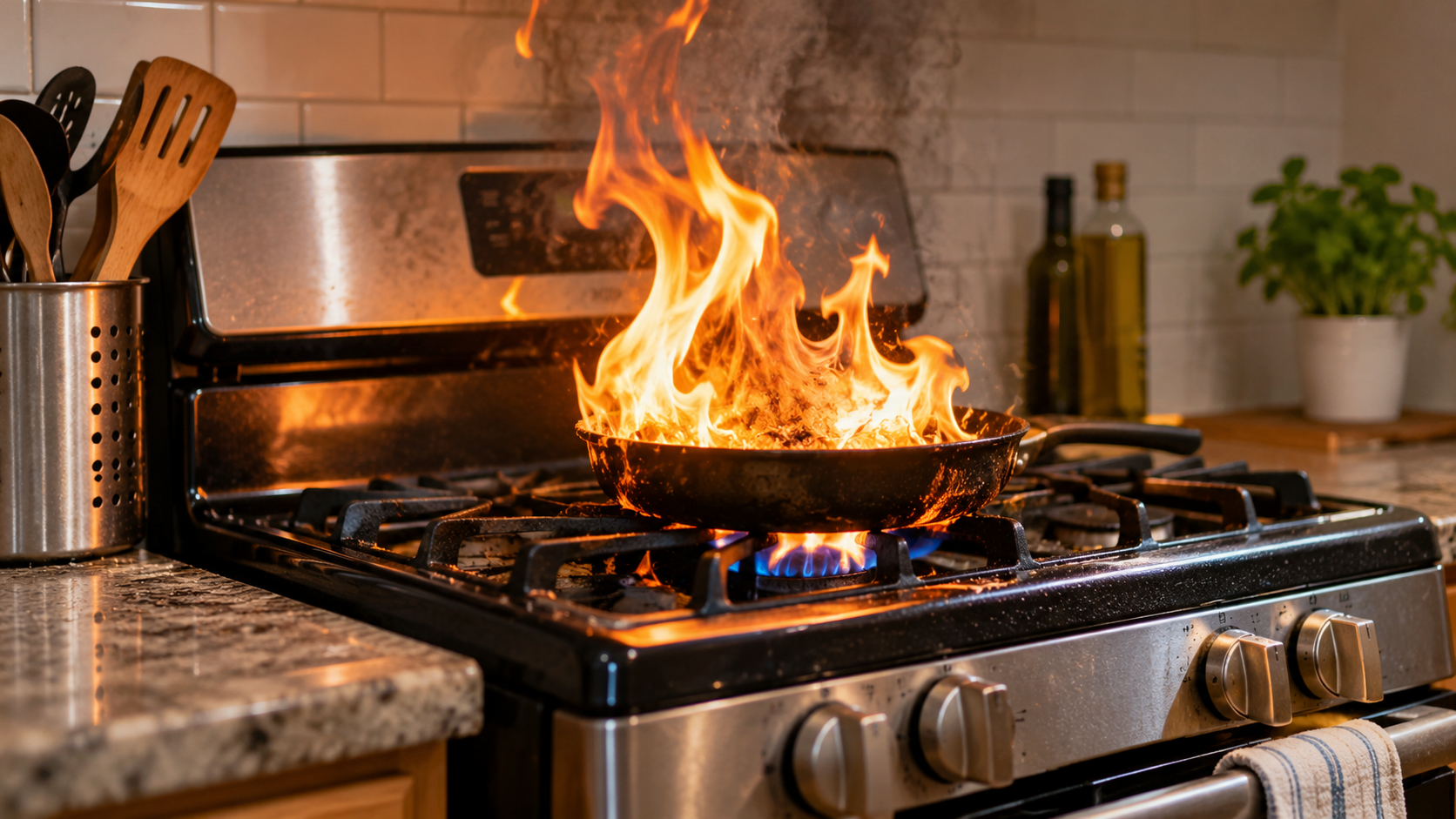
- Gas stove explosions and flash fires: Gas leaks, faulty valves, defective igniters or bad connections that cause a fireball when the stove is lit.
- Stove tip-overs: Freestanding ranges that tip forward when the oven door is opened or weight is placed on it, often because they lack an anti-tip bracket or were installed without one.
- Scalding water and spills from the stove: A tipping stove or unstable burner can send pots of boiling water, soup or oil onto the person standing nearby. These scald burns are especially dangerous for children and older adults.
- Other defective products: Pressure cookers that explode, space heaters, e-bike and scooter batteries, hot water heaters, and faulty electrical appliances.
Burns in Apartments and Other Premises
Landlords and building owners must keep appliances, gas lines, boilers and wiring in safe condition. When a landlord ignores a gas leak, installs a stove improperly, or lets hot water run at unsafe temperatures, tenants can be seriously burned. These cases may involve both the landlord and the product manufacturer.
Case Example: A Defective Stove in the Bronx
Our firm represented a woman from the Bronx, New York, who suffered serious burns to her chest because of a defective stove. What should have been an ordinary moment cooking at home turned into a painful injury that required medical treatment and left lasting effects.
We investigated how the stove failed, identified the parties responsible, and pursued her claim for her medical bills, pain and suffering, and scarring. The case was successfully resolved for our client.
This case shows how a household appliance that people use every day can cause life-changing harm when it is defective or poorly maintained.
Prior results do not guarantee a similar outcome.
What to Do After a Burn Injury
- Get medical care right away. Even burns that look minor can become infected or turn out to be deeper than they seem.
- Photograph the injury and the scene. Take pictures of the burn as it heals, the product, the stove or equipment, and the area where it happened.
- Keep the product. Do not throw away, repair or return a defective stove or appliance. It is key evidence.
- Report it. Notify your employer, landlord or building manager in writing, and keep a copy.
- Do not give recorded statements to insurance companies before speaking with a lawyer.
- Call a lawyer quickly. Deadlines apply, and claims against a New York City agency can require a Notice of Claim within 90 days.
Talk to The Cakani Law Firm
If you or a loved one was burned on a construction site, by a defective stove or other product, or in an unsafe apartment, call The Cakani Law Firm, P.C. for a free consultation.
We have offices in White Plains, Manhattan and Englewood Cliffs, NJ. You pay no fee unless we recover for you.
The Cakani Law Firm, P.C.
200 Mamaroneck Avenue, Suite 505
White Plains, NY 10601
Phone: (212) 962-0500
Email: pcakani@cakanilaw.com
Website: www.cakanilaw.com
Attorney Advertising. Prior results do not guarantee a similar outcome. This article is for general information only and is not legal advice. Reading this article does not create an attorney-client relationship.

