
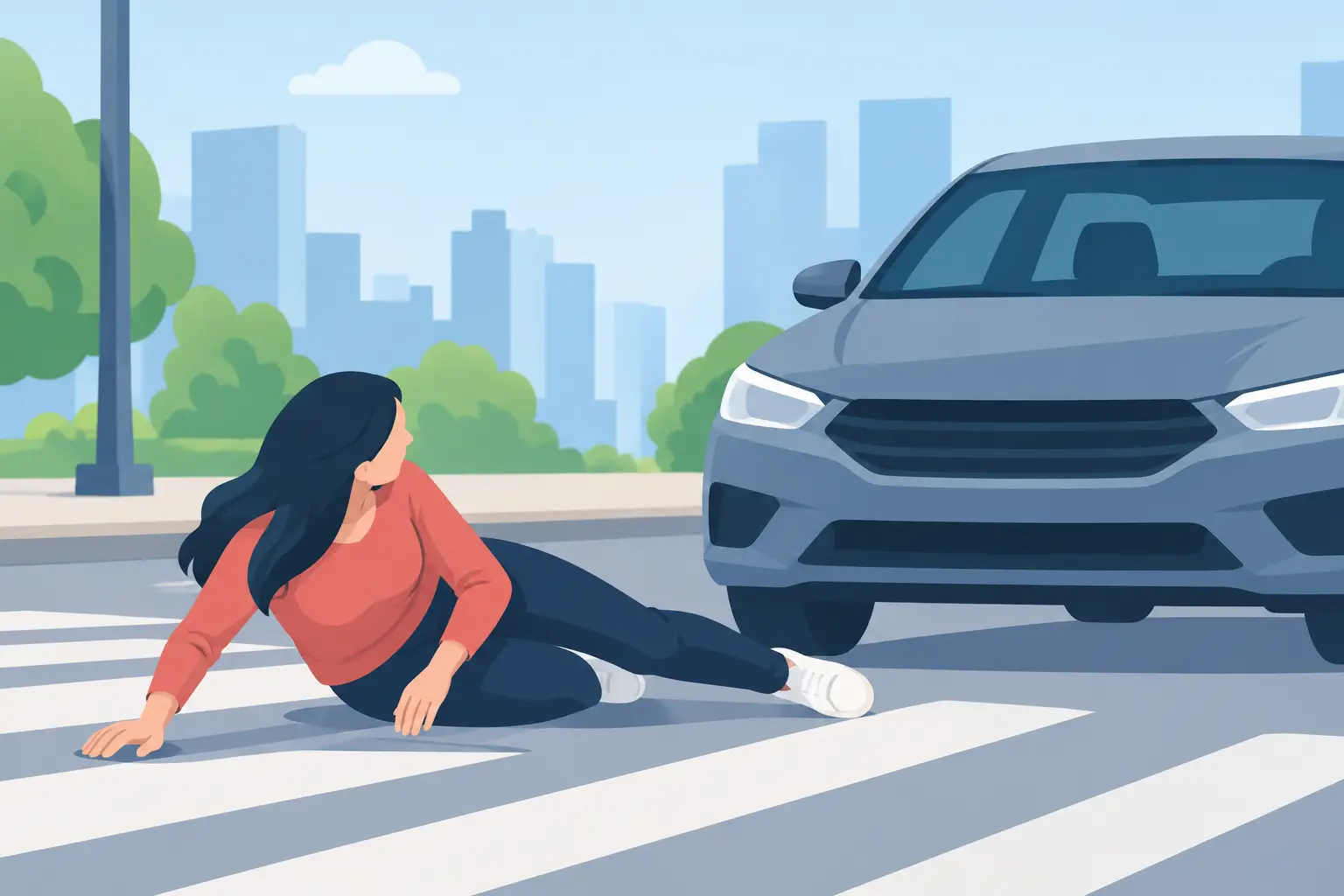
A pedestrian hit by car claim is about far more than the impact at the crosswalk. A driver may leave you with broken bones, a brain injury, surgery, missed paychecks, and a long recovery that changes daily life. Meanwhile, an insurance company may call quickly, ask for a recorded statement, and look for a reason to limit what it pays.
You do not have to accept that pressure. When a driver fails to yield, speeds, turns without checking a crosswalk, drives distracted, or ignores a traffic signal, the injured pedestrian may have the right to seek compensation. The strength and value of a claim depend on the evidence, the severity of the injuries, available insurance coverage, and the laws of New York or New Jersey.
What to Do After a Pedestrian Is Hit by a Car
Your health comes first. Accept emergency medical care at the scene and follow up with a doctor as soon as possible, even if you think the pain will pass. Adrenaline can hide serious injuries, including concussions, internal injuries, and soft-tissue damage. Delaying care can also give an insurer an opening to argue that your injuries were not caused by the crash.
If you are able, report the accident to police and make sure a report is prepared. Get the driver’s name, contact information, license plate number, and insurance information. If witnesses saw the crash, ask for their names and phone numbers. A witness who saw a driver make an unsafe left turn or run a red light can be critical when fault is disputed.
Photos and video can disappear quickly. Take photographs of the vehicle, damage, skid marks, your visible injuries, the intersection, traffic signals, signs, weather conditions, and anything that may explain how the collision happened. Nearby businesses, apartment buildings, buses, and private homes may have surveillance footage. That footage is often overwritten within days.
Keep the clothes and shoes you wore at the time of the collision without washing or repairing them. Save medical bills, prescriptions, discharge papers, work absence records, and every letter or message from an insurance company. A written journal can also help document pain, sleep problems, mobility limits, and activities you can no longer do.
Who May Be Responsible for a Pedestrian Hit by Car Claim?
The driver is often the first potential defendant, but not always the only one. A serious claim requires a careful investigation rather than assumptions about who should pay.
A driver may be responsible for failing to yield to a pedestrian, speeding, texting, driving while impaired, following traffic too closely, or making an unsafe turn. In many city crashes, drivers claim they never saw the pedestrian. That does not excuse a failure to keep a proper lookout.
Other parties may also carry responsibility. The vehicle owner may be liable in certain circumstances. If the driver was working, making a delivery, or operating a company vehicle, an employer or business may be involved. A dangerous roadway design, broken signal, obstructed sightline, or poorly maintained construction zone can raise questions about a property owner, contractor, or government entity.
These cases can become complicated quickly, especially when multiple insurance policies, commercial vehicles, rideshares, or public entities are involved. Identifying every responsible party matters because a devastating injury can exceed one driver’s policy limits.
Evidence That Can Strengthen Your Case
Insurance companies often try to shift blame to the person on foot. They may argue that the pedestrian crossed outside a crosswalk, entered the roadway suddenly, wore dark clothing, or was distracted. Those arguments are not the end of the case. Drivers still have a duty to use reasonable care and avoid striking pedestrians when possible.
Strong evidence can establish what actually happened. This may include the police report, witness accounts, traffic-camera footage, surveillance video, vehicle event data, cell phone records, accident reconstruction analysis, and photographs from the scene. Medical records are equally important because they connect the collision to your diagnosis, treatment, limitations, and future medical needs.
For a high-impact crash, expert work may be necessary. Accident reconstruction professionals can evaluate speed, braking, sight distance, and timing. Medical specialists can explain whether a traumatic brain injury, orthopedic injury, nerve damage, or chronic pain condition will affect your ability to work and live independently. Serious cases should not be valued from a stack of bills alone.
What Compensation Can a Pedestrian Claim Include?
A pedestrian injury claim may seek damages for both financial losses and the human cost of the injury. Depending on the circumstances, compensation can include medical expenses, future treatment, rehabilitation, lost wages, diminished earning capacity, and out-of-pocket costs.
It can also include pain and suffering, emotional distress, loss of enjoyment of life, scarring, disfigurement, and the effect the injuries have on family relationships. If a pedestrian dies from crash injuries, surviving family members may have a wrongful death claim under the laws that apply to the case.
There is no honest one-size-fits-all settlement number. A broken wrist that heals fully is evaluated differently from a spinal injury requiring surgery or a brain injury that prevents a parent from returning to work. Insurance coverage matters too. A thorough review may uncover coverage through the driver, vehicle owner, employer, commercial policy, or your own household automobile policy.
New York and New Jersey Rules Can Affect Recovery
New York and New Jersey each have insurance rules that can affect a pedestrian’s available benefits and lawsuit options. In New York, no-fault benefits may provide certain medical and wage-loss coverage after a motor vehicle collision, subject to deadlines and policy terms. To recover for pain and suffering from an insured vehicle, an injured person may need to meet the state’s serious injury threshold.
New Jersey has its own personal injury protection and insurance framework. A pedestrian may have benefits through their own automobile policy, a household member’s policy, or another applicable source. Policy language, coverage elections, and the facts of the crash can all matter.
Fault can also be shared. If an insurer argues that you contributed to the accident, that may affect recovery, but it does not automatically eliminate a claim. Do not let a driver’s accusation prevent you from getting the facts reviewed. The law is fact-specific, and video, witness testimony, and roadway evidence may tell a very different story.
Avoid These Early Insurance Mistakes
After a crash, an adjuster may sound concerned while gathering information that protects the insurer. You are not required to make the insurer’s job easier at the expense of your recovery.
Do not give a recorded statement or sign broad medical authorizations before you understand your rights. Do not minimize your symptoms just because you are trying to stay strong. Do not post details, photographs, or activity updates about the accident on social media. And do not accept a quick settlement before doctors can assess whether you need surgery, extended therapy, or future care.
A fast offer may cover an emergency room bill while leaving nothing for lost income, follow-up treatment, or permanent limitations. Once a settlement is signed, reopening the claim is usually not an option.
When to Speak With a Pedestrian Accident Lawyer
Legal help is particularly important when injuries are serious, fault is disputed, the driver was uninsured, a commercial vehicle was involved, or an insurer has denied or undervalued the claim. It is also important when a loved one was killed or when another firm has declined the case without fully investigating it.
The Cakani Law Firm, P.C. represents injured people and families in New York and New Jersey in serious accident litigation. The firm focuses on building cases that insurance companies cannot dismiss with assumptions, including cases that require medical experts, liability investigation, and the resources to take a claim to court. There are no attorney fees unless there is a recovery.
Deadlines can be shorter in claims involving government vehicles or public property, and valuable evidence can be lost early. Get medical care, preserve what you can, and seek a prompt legal evaluation. The next step is not to argue with an insurance adjuster – it is to protect your health, your evidence, and your ability to move forward.

