
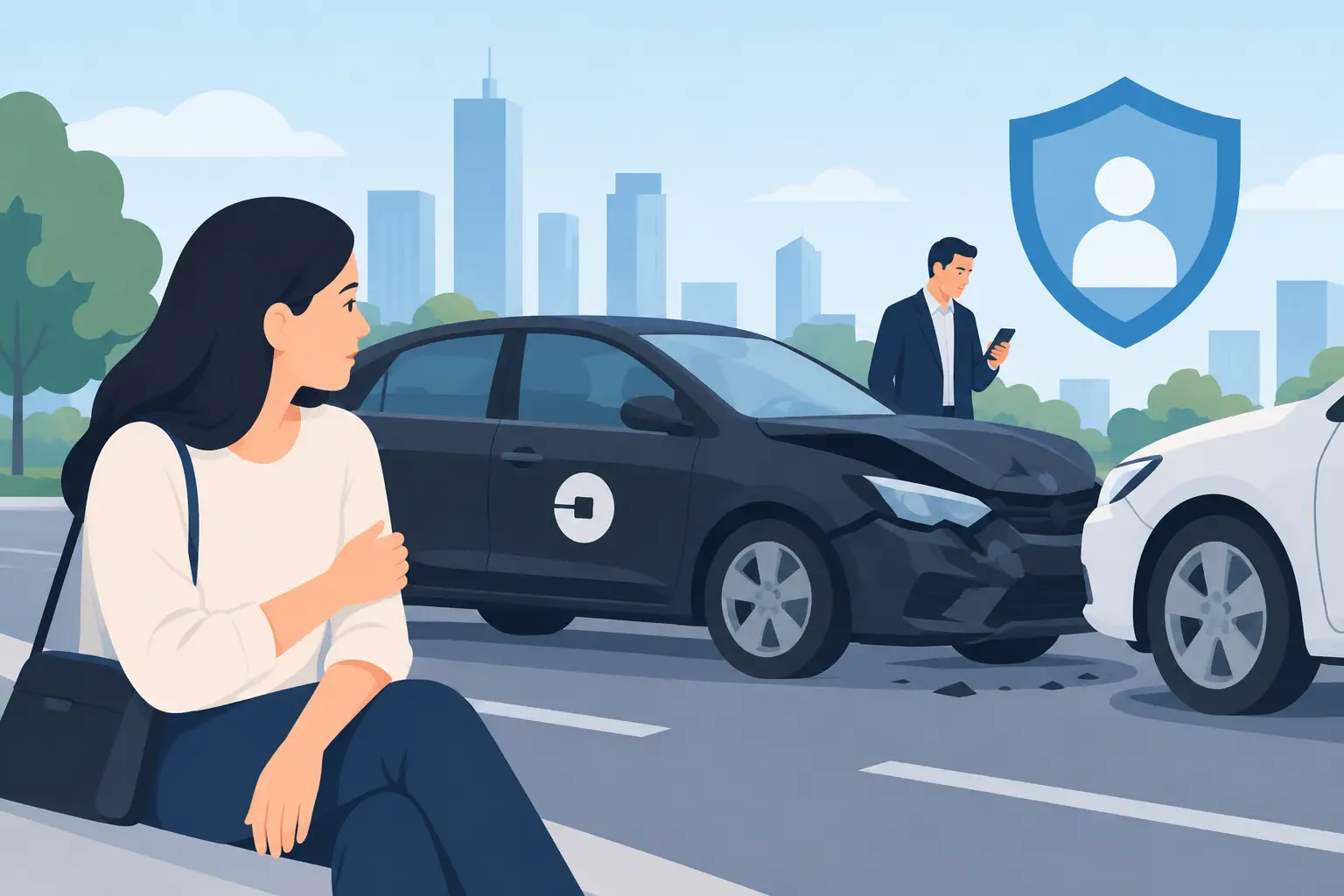
A rideshare crash can turn an ordinary trip home, commute, or night out into an emergency. If you were hurt while riding in an Uber, uber passenger accident compensation may be available for your medical care, lost income, pain, and other losses. But the path to recovery is not always simple. Multiple insurance policies may apply, drivers may dispute fault, and insurers may move quickly to limit what they pay.
You were a passenger. You should not be left carrying the financial burden of a collision you did not cause. The steps you take after the crash can protect both your health and your ability to pursue a strong claim.
Who Pays Uber Passenger Accident Compensation?
The answer depends on what happened in the seconds before the collision and who caused it. An Uber crash can involve the rideshare driver, another motorist, a commercial vehicle, a pedestrian, a cyclist, or even an unsafe roadway. More than one party may be responsible.
Uber generally provides insurance coverage when a driver is actively transporting a passenger or is on the way to pick one up. Coverage can be substantial during an active trip, but insurance coverage is not the same as a guaranteed recovery. The available policy, the driver’s app status, the severity of the injuries, and the evidence of fault all matter.
If another driver caused the crash, that driver’s liability insurance may be the first source of compensation. If that driver is uninsured or underinsured, other coverage may become relevant. Depending on the facts, this can include Uber-related coverage, the rideshare driver’s personal policy, or uninsured and underinsured motorist coverage available through your own household auto policy.
A serious injury claim should not stop at the first policy an insurer identifies. A careful investigation looks at every potentially responsible party and every available layer of coverage.
What Damages Can an Injured Uber Passenger Recover?
Compensation should reflect the real effect of the collision, not merely the first emergency room bill. A passenger injured in a high-impact crash may need diagnostic testing, surgery, physical therapy, pain management, home assistance, or long-term medical care. Some injuries do not reveal their full consequences for weeks or months.
A claim may seek payment for medical expenses already incurred and the reasonable cost of future treatment. It may also include lost wages, reduced earning capacity, rehabilitation expenses, and out-of-pocket costs connected to the injury.
Just as importantly, New York and New Jersey law may permit recovery for non-economic harm, including physical pain, emotional distress, loss of enjoyment of life, and the ways an injury changes your relationship with your family and your work. A fracture, spinal injury, traumatic brain injury, nerve damage, or worsening of a preexisting condition can affect far more than a medical chart.
When a passenger is killed in a rideshare crash, surviving family members may have a wrongful death claim. These cases demand immediate attention. They often involve significant financial losses, difficult insurance issues, and evidence that can disappear if no one acts quickly.
Why New York and New Jersey Claims Can Be Different
New York and New Jersey each have rules that can affect an accident claim. In New York, no-fault benefits may initially cover certain medical expenses and lost earnings regardless of fault. However, a person seeking compensation for pain and suffering in a car accident generally must meet the state’s serious injury threshold.
That threshold is not a reason to assume you do not have a case. A lawyer should review the diagnosis, treatment, limitations, imaging, and prognosis before reaching conclusions. Insurance companies routinely minimize injuries that later prove disabling.
New Jersey has its own insurance system and policy options. Some injured people may face a lawsuit limitation commonly known as the verbal threshold. Whether it applies, and whether an injury meets an exception, depends on the policy and medical evidence. These are fact-specific questions, especially where there are permanent injuries, scarring, or significant functional limitations.
The location of the crash also matters. A collision on a Manhattan avenue, a Brooklyn expressway, the New Jersey Turnpike, or a local road near Newark can raise different issues about police reports, defendants, witnesses, and the applicable law.
Evidence Can Decide an Uber Passenger Accident Claim
The insurance company may sound helpful at first. Its goal, however, is to close the claim for as little as possible. An adjuster may ask for a recorded statement before you understand your diagnosis. They may suggest that you were already injured, that treatment was unnecessary, or that a low early offer is fair.
Do not guess about fault or minimize your pain. Get medical attention promptly and follow through with recommended care. Then preserve what you can. Keep screenshots of the Uber trip, including the driver’s name, vehicle details, route, receipt, and time of the ride. Photograph visible injuries and vehicle damage if possible. Save medical paperwork, work absence records, and receipts for expenses caused by the crash.
A serious case may require evidence beyond the police report. That can include nearby camera footage, vehicle data, dispatch records, app-status information, witness statements, accident reconstruction, and expert medical opinions. Camera footage from a storefront, apartment building, or intersection may be overwritten within days. The sooner an investigation begins, the better the chance of preserving it.
Mistakes That Can Reduce Your Recovery
There is no perfect way to respond after a traumatic crash. Still, several common decisions can give an insurer ammunition.
First, do not delay medical treatment simply because you hope the pain will pass. A gap in treatment can affect your health and make it easier for an insurer to argue that the injury was minor or unrelated.
Second, do not accept a settlement before you know the full medical picture. Once you sign a release, you generally cannot return for more money if surgery becomes necessary or symptoms worsen.
Third, be cautious with recorded statements and broad medical authorizations. An insurer is entitled to investigate a claim, but you do not have to provide a narrative that is incomplete, confused, or taken out of context while you are injured and overwhelmed.
Finally, do not assume the Uber driver is your only source of recovery. A thorough case review may reveal another at-fault driver, a trucking company, a vehicle owner, a defective vehicle component, or unsafe road conditions. Complex claims require a wider investigation than a single insurance call.
When to Speak With a Rideshare Accident Lawyer
Legal help is especially valuable if you were taken by ambulance, missed work, suffered a fracture or head injury, need continuing treatment, or lost a family member. It is also critical when insurers blame each other, deny coverage, or pressure you to settle.
A personal injury lawyer can identify the available insurance coverage, secure evidence, calculate the full value of the loss, and confront the tactics used to reduce valid claims. In high-severity cases, that work may require accident reconstruction specialists, medical experts, economists, and litigation resources that an injured passenger should not have to fund alone.
The Cakani Law Firm, P.C. represents injured people and families throughout New York and New Jersey in serious motor vehicle and rideshare accident cases. The firm pursues claims on a contingency-fee basis, meaning there is no attorney fee unless there is a recovery.
Time limits apply to personal injury claims, and some evidence is gone long before a deadline expires. If an Uber ride ended in an injury, focus first on getting the care you need. Then get clear answers about your rights before an insurance company decides what your future is worth.

