
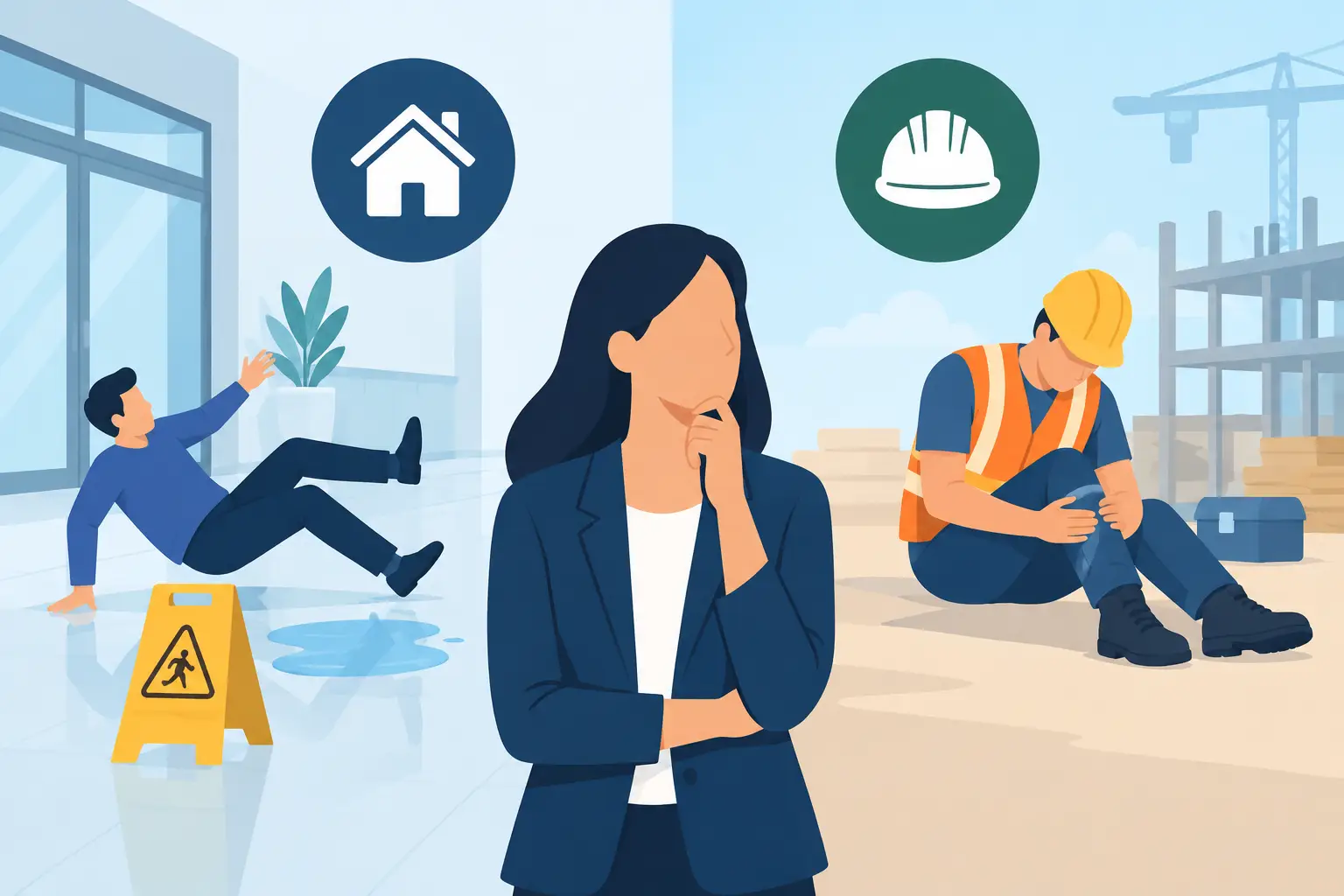
A fall at work can leave you with broken bones, surgery, lost pay, and a pile of unanswered questions. The difference between a premises claim versus workers compensation can determine whether you can recover only limited wage and medical benefits or pursue the full financial impact of a serious injury.
For many injured workers, the answer is not one or the other. A workers’ compensation claim may protect immediate benefits, while a separate lawsuit against a negligent property owner, contractor, vendor, or other third party may pursue compensation workers’ compensation does not provide. The facts matter. So does moving quickly before critical evidence disappears.
What Workers’ Compensation Covers After a Work Injury
Workers’ compensation is generally a no-fault system. If you were injured while doing your job, you may be eligible for benefits even if you made a mistake that contributed to the accident. In exchange, you usually cannot sue your direct employer for ordinary negligence.
In New York and New Jersey, workers’ compensation may cover authorized medical treatment and a portion of lost wages when an injury keeps you from working. It can also provide disability benefits, vocational assistance in some cases, and death benefits for eligible family members after a fatal workplace accident.
Those benefits can be essential when a worker needs treatment immediately. But they are not designed to make a seriously injured person whole. Workers’ compensation generally does not pay for pain and suffering, the full value of lost income, loss of enjoyment of life, or the personal toll an injury takes on a spouse and family.
A worker with a spinal injury after a construction fall, for example, may face years of treatment, permanent restrictions, and a career that has been cut short. Limited wage benefits may not begin to address that loss.
When a Premises Claim May Be Available
A premises liability claim is a personal injury lawsuit based on unsafe property conditions. The key question is often whether someone other than your employer owned, controlled, maintained, created, or failed to correct the dangerous condition that caused the injury.
A premises claim may arise when a worker is hurt because of a broken stairway, unsecured flooring, poor lighting, ice accumulation, unsafe access route, falling debris, defective elevator, or another hazardous condition on a jobsite or commercial property. The responsible party may be a building owner, managing agent, general contractor, subcontractor, maintenance company, equipment company, or another business working at the location.
Unlike workers’ compensation, a successful premises claim can seek damages for the full harm caused by negligence. Depending on the case, that may include past and future lost earnings, medical expenses, pain and suffering, loss of quality of life, and damages available to a spouse or family. In a wrongful death case, surviving family members may have additional claims.
The existence of a dangerous condition alone does not automatically create a case. Your legal team must investigate who controlled the area, whether the hazard existed long enough for the responsible party to discover it, whether someone created it, and whether safety rules were ignored. Surveillance video, incident reports, photographs, work orders, building records, witness statements, and expert analysis can become decisive evidence.
Premises Claim Versus Workers’ Compensation: The Major Differences
Workers’ compensation and a premises lawsuit serve different purposes. Workers’ compensation focuses on benefits after an on-the-job injury and usually does not require proof that anyone was at fault. A premises claim requires proof of negligence, but it can offer substantially broader recovery.
The trade-off is that a premises case is often harder fought. Property owners and their insurers may argue that the condition was open and obvious, that they lacked notice, that another contractor controlled the location, or that the injured worker caused the accident. They may also move quickly to repair the dangerous area or allow important evidence to vanish.
Workers’ compensation claims also have limits when a worker can no longer return to the same physical job. Benefits are typically tied to statutory formulas, not the real-world value of a career, overtime opportunities, retirement contributions, or the daily consequences of chronic pain.
That is why a serious workplace injury should never be evaluated only as a workers’ compensation matter. The right question is: who else may be legally responsible?
Construction Accidents Often Involve Third-Party Claims
Construction sites are especially likely to involve multiple companies with overlapping responsibilities. A laborer may work for one subcontractor while the project is owned by another entity, managed by a construction manager, and staffed by numerous trades. That creates potential third-party liability when unsafe conditions cause harm.
New York law provides important protections for construction workers in certain cases. For example, New York Labor Law Sections 240(1) and 241(6) may apply to falls from heights, falling objects, scaffolds, ladders, and violations of specific industrial safety rules. Labor Law Section 200 and common-law negligence claims may apply where an owner or contractor controlled the work or had notice of a dangerous condition.
These claims are highly fact-specific. A worker who falls from a ladder may have a powerful claim, but the available legal theories depend on why the ladder failed, who supplied it, what work was being performed, and which entities had authority over the site. A fall on a slippery floor can raise different issues involving maintenance, notice, and site control.
New Jersey workers may also have third-party claims against negligent property owners, contractors, equipment manufacturers, or other non-employer entities. The central point remains the same: workers’ compensation may be only one part of the recovery picture.
Can You Pursue Both Claims at the Same Time?
Often, yes. An injured worker may file a workers’ compensation claim against the employer while pursuing a third-party premises liability lawsuit against another responsible party. Doing so can protect access to medical and wage benefits while preserving a separate claim for broader damages.
There are complications. The workers’ compensation insurer may assert a lien or seek reimbursement from money recovered in a third-party case. The interaction between benefits, liens, settlement terms, and future medical needs must be handled carefully. A poorly structured settlement can leave money on the table or create avoidable problems later.
It also matters whether the defendant is truly a third party. A company’s corporate relationships, contractual role, and level of control over the worksite can affect whether it is protected by workers’ compensation rules or can be sued. Do not assume a familiar company name means there is no claim.
What to Do After a Workplace Fall or Unsafe Property Injury
Your health comes first. Get medical care and clearly explain that the injury happened at work. Report the accident to a supervisor as soon as possible, but do not let an employer’s report become the only record of what happened.
If you can do so safely, preserve photographs of the accident area, the hazard, your footwear or equipment, and visible injuries. Keep names and contact information for witnesses. Save texts, work assignments, incident reports, pay records, and medical documents. Do not post details of the accident or your recovery on social media while a claim is pending.
Most importantly, seek a legal evaluation early. Deadlines can be short, particularly when a government entity or public property is involved. New York and New Jersey also have different notice requirements and filing rules. Waiting can make a valid case far more difficult to prove.
Questions Injured Workers Commonly Ask
Can I sue my employer for a dangerous workplace?
In most ordinary workplace injury cases, workers’ compensation is the exclusive remedy against a direct employer. But you may have a lawsuit against a third party, such as a property owner, general contractor, subcontractor, equipment manufacturer, or maintenance company. Limited exceptions may exist, so the relationship among the companies must be investigated.
What if I was partly at fault for the accident?
Being partly at fault does not necessarily eliminate a premises claim. New York and New Jersey generally apply comparative negligence principles, meaning compensation may be affected by your share of responsibility. Insurance companies often exaggerate worker fault to reduce what they pay. The evidence must tell the real story.
What if the property owner says it did not know about the hazard?
A property owner may be liable if it created the dangerous condition or had actual or constructive notice of it. Constructive notice can exist when a condition was visible and present long enough that reasonable inspection and maintenance should have found it. Records, photographs, and witness testimony can be critical.
A serious injury can change every part of a family’s life. If you were hurt on a jobsite, in a building, or on property controlled by someone other than your employer, do not accept a quick answer that workers’ compensation is your only option. The Cakani Law Firm, P.C. can evaluate the responsible parties, preserve the evidence, and fight for the recovery you need to move forward.

