
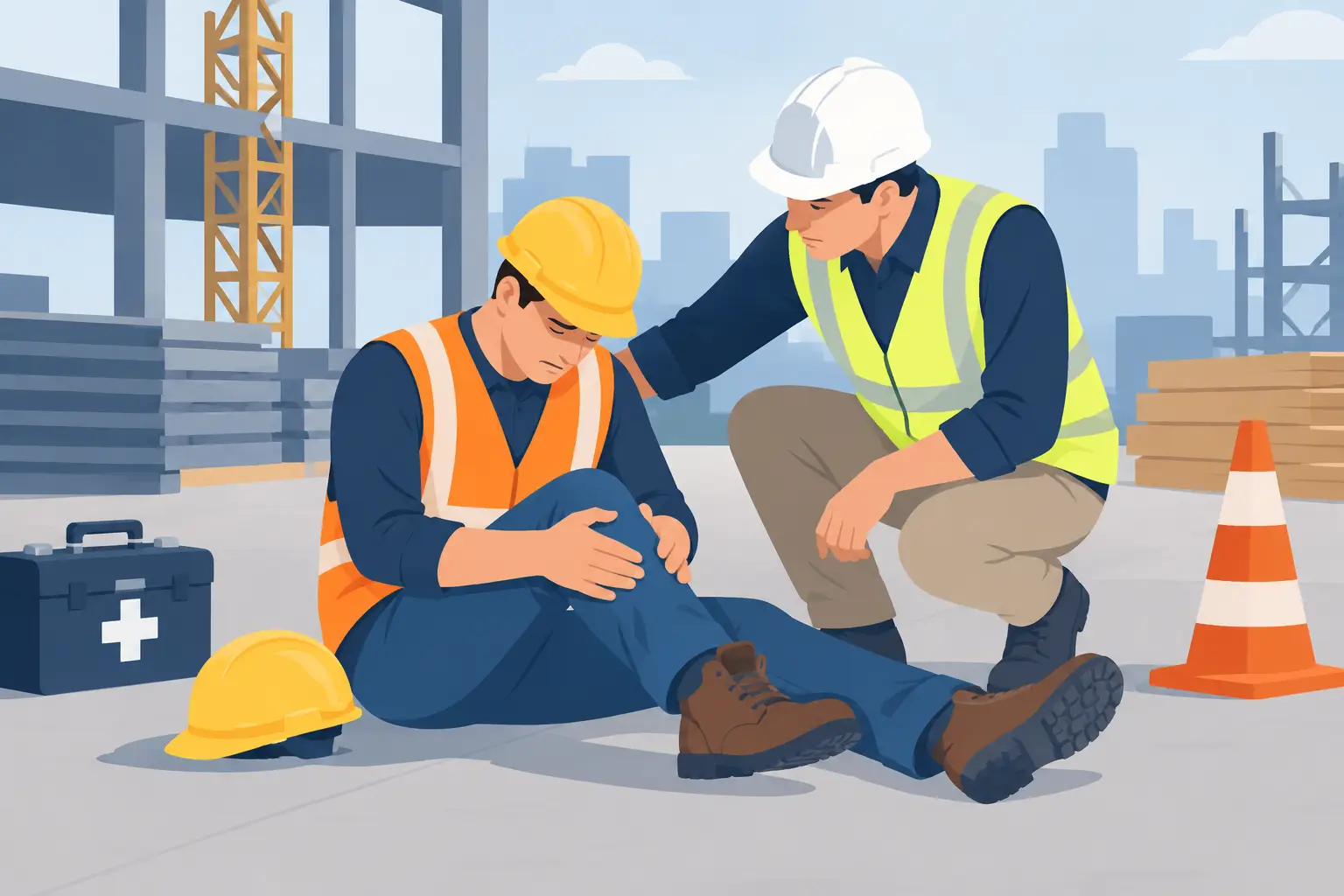
A construction accident can change the course of a working person’s life in seconds. A fall from a scaffold, a collapsing ladder, a struck-by incident, an electrical burn, or a falling object can leave you facing surgery, missed paychecks, and pressure from people who do not have to live with your injuries. Knowing what to do after a construction accident can protect your health first and preserve critical evidence before it disappears.
Get Medical Care Before You Worry About the Paperwork
Call 911 or seek emergency care immediately if you have severe pain, bleeding, head trauma, loss of consciousness, breathing trouble, numbness, or a possible fracture. Do not try to “walk it off” because a supervisor needs the job finished or because you are concerned about missing work.
Some construction injuries are not obvious at the scene. A back injury, traumatic brain injury, internal injury, or damage to a joint may worsen over hours or days. Tell the medical provider exactly how the incident occurred, what equipment was involved, where you were working, and every symptom you are experiencing. Be honest and thorough. Your medical records may become central evidence later.
Follow through with recommended treatment. Gaps in care can hurt your recovery and give an insurance company an opening to argue that your injuries were less serious than they are.
Report the Accident Promptly and Clearly
Tell your foreman, supervisor, site safety manager, or employer that you were hurt. Ask for an accident report to be created, and request a copy if one is available. If you cannot get a copy, write down the date, time, location, who you notified, and what they said.
Keep the report factual. State what happened without guessing about details you do not know or accepting blame that does not belong to you. For example, if a plank shifted beneath you, report that fact. Do not let anyone pressure you into saying you were careless, failed to use equipment, or were responsible for an unsafe condition before the facts are investigated.
If your employer asks you to sign a statement, medical authorization, or other document, read it carefully. You generally have the right to understand what you are signing. A broad authorization can give an insurer access to medical information that has nothing to do with your construction injury.
Preserve Evidence Before the Job Site Changes
Construction sites change fast. Damaged equipment gets repaired or removed. Debris is cleared. Scaffolds are dismantled. Witnesses move to another project. The evidence that proves why you were hurt may be gone within days.
If your condition allows, take photographs and video of the accident location, equipment, safety devices, warning signs, lighting, debris, footwear, and your visible injuries. Ask a coworker or family member to do this if you cannot. Save the clothes, boots, hard hat, harness, gloves, and other gear involved in the incident. Do not wash, repair, or throw them away.
Write down the names and phone numbers of everyone who saw the accident or arrived immediately afterward. Coworkers may be reluctant to speak openly on site, particularly if they fear retaliation, but their observations can matter enormously. Note the names of the general contractor, subcontractors, property owner, construction manager, and equipment companies posted at the site.
Keep a separate file for photographs, hospital records, prescriptions, bills, work restrictions, workers’ compensation notices, and communications from insurers or employers. A simple written journal can also help document pain levels, appointments, limitations at home, and work you have missed.
Understand That Workers’ Compensation May Not Be Your Only Claim
Workers’ compensation can provide medical treatment and partial wage benefits after a job-related injury. But it usually does not compensate you fully for pain and suffering, the full value of lost earnings, or the long-term impact a catastrophic injury can have on your family.
That is why an injured worker should investigate whether a separate personal injury claim exists against a party other than the employer. Depending on the facts, responsible parties may include a property owner, general contractor, subcontractor, equipment manufacturer, delivery company, or another negligent worker or company.
New York has particularly strong protections for many elevation-related construction injuries. Under certain circumstances, property owners and contractors may be held responsible when workers are injured in falls from scaffolds, ladders, roofs, hoists, or other elevated work areas, as well as falling-object incidents. These claims are fact-specific, and the identities of the companies involved matter.
New Jersey cases are different. Liability may turn on who controlled the work, created the danger, supplied the equipment, or failed to correct a known unsafe condition. In either state, a serious injury deserves a prompt investigation rather than an assumption that workers’ compensation is the end of the matter.
Be Careful With Insurance Companies and Recorded Statements
An insurer may contact you quickly, sometimes while you are still in pain or taking medication. The adjuster may sound concerned and may ask for a recorded statement, a broad medical release, or a quick settlement. Their job is to limit what the insurer pays, not to protect your future.
You can provide necessary basic information for a workers’ compensation claim, but do not guess about fault, minimize your symptoms, or agree to a recorded statement for another insurer without legal guidance. A serious injury can require future surgeries, rehabilitation, home assistance, and years of lost income. A fast settlement offer may not come close to covering what the accident has truly cost.
Avoid posting about the accident, your physical activities, or your claim on social media. Insurers and defense lawyers routinely look for posts, photos, and comments they can take out of context.
Get Legal Guidance While Evidence Is Still Available
The days after an accident are difficult, but they are also when a strong legal case begins to take shape. A construction accident lawyer can identify every potentially responsible party, move to preserve site records and video, inspect defective equipment, and work with safety, engineering, medical, and economic experts when the injuries warrant it.
This is especially critical when the injury is severe or permanent. The companies involved may have lawyers, investigators, and insurers protecting their interests from the start. You deserve representation prepared to confront them with the resources the case requires.
The Cakani Law Firm, P.C. represents injured construction workers and families throughout New York and New Jersey in high-stakes injury cases. The firm focuses on personal injury litigation and does not charge attorney fees unless it wins. A free case evaluation can help you understand whether negligent contractors, owners, equipment companies, or other parties may be accountable.
What to Do After a Construction Accident When You Cannot Work
Lost income creates a crisis quickly, particularly for workers supporting children, spouses, or aging parents. Keep records of every missed day, reduced-hour schedule, lost overtime opportunity, and job duty you can no longer perform. Save pay stubs, tax records, union documents, and communications about your work status.
Do not return to heavy work before your treating doctor clears you simply because you feel financial pressure. Returning too soon can make an injury worse and create confusion about the true cause of later symptoms. If an employer offers light duty, discuss the specific duties with your medical provider so that restrictions are clear.
Family members should also preserve their own records when an injury requires them to provide transportation, household help, childcare, or care at home. These changes reveal the real human cost of a construction accident, beyond what appears on a hospital bill.
You do not need to know every law or have every document before asking for help. Focus on getting appropriate medical care, protecting what you can, and refusing to let a preventable accident be treated as just another cost of doing business.

