
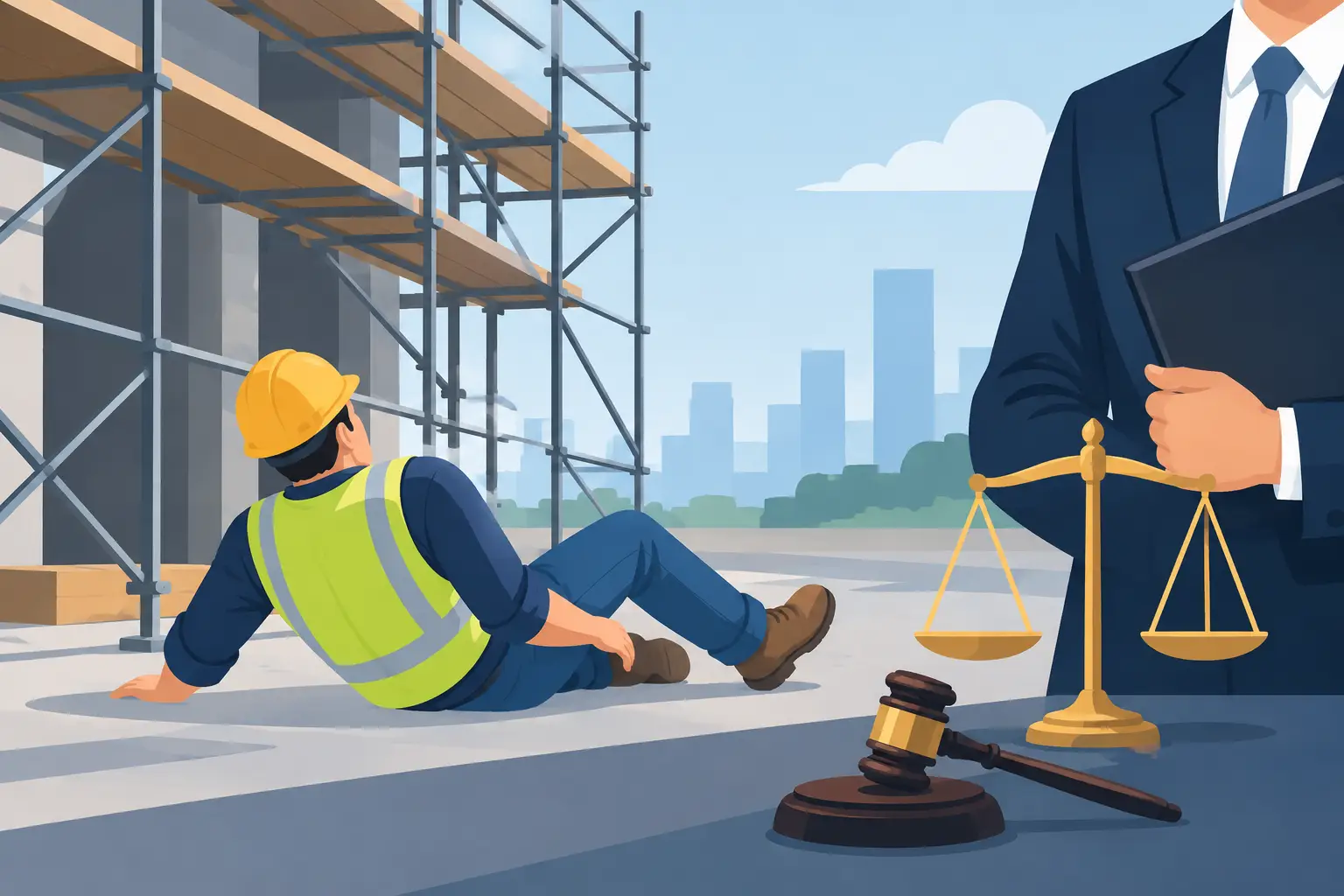
A scaffold collapse, missing guardrail, failed plank, or unsecured ladder access can turn a normal workday into a life-altering emergency in seconds. If you were hurt, a scaffold fall injury lawyer can examine what failed, identify every responsible party, and pursue the full compensation your injury demands. The Cakani Law Firm, P.C. represents seriously injured workers and families across New York and New Jersey in high-stakes construction accident claims.
Scaffold falls often cause catastrophic harm: traumatic brain injuries, spinal cord injuries, crushed limbs, broken bones, internal bleeding, and permanent pain. The physical consequences are only part of the crisis. Many injured workers cannot return to the trade that supported their family, while medical bills and insurance pressure start almost immediately.
Why Scaffold Fall Cases Demand Immediate Investigation
Construction sites change quickly. A damaged plank may be removed, safety equipment may be replaced, and the scene may be cleaned before an injured worker has a chance to understand what happened. Critical evidence can disappear just as fast.
A serious scaffold fall claim requires more than an accident report. It may require photographs of the scaffold, site plans, safety logs, contracts, training records, witness accounts, maintenance records, and expert analysis. The central question is often straightforward: Was the scaffold, its setup, or the safety protection provided to the worker adequate? Proving the answer can be difficult when property owners, general contractors, subcontractors, and insurers each point the finger elsewhere.
That is why early legal help matters. A law firm with construction litigation resources can move to preserve evidence and begin building the case before the defense has the opportunity to control the narrative.
A Scaffold Fall Injury Lawyer Looks Beyond Workers’ Compensation
Workers’ compensation can provide medical coverage and a portion of lost wages after a workplace accident. But it may not come close to covering the true cost of a disabling scaffold injury. It generally does not compensate an injured worker for pain and suffering, the full value of lost future earnings, or the profound impact an injury has on family life.
In many cases, an injured construction worker may have a separate personal injury claim against a party other than their direct employer. Depending on the facts, potential defendants can include the property owner, general contractor, construction manager, a subcontractor, scaffold company, equipment manufacturer, or another outside party whose negligence contributed to the fall.
The answer depends on the work arrangement, the location, the contract structure, and the mechanism of the fall. A worker should never assume that a workers’ compensation claim is the only option simply because the accident occurred on the job.
New York Scaffold Fall Claims Can Involve Powerful Legal Protections
New York construction workers may have significant protections under the state’s Labor Law. Labor Law Section 240(1), often called the Scaffold Law, may apply when a worker is injured in an elevation-related accident because adequate safety devices were absent or failed. The law can cover certain falls from scaffolds, ladders, hoists, and other elevated work areas, as well as injuries from objects that fall from above.
These claims are highly fact-specific. The type of work being performed, the height-related risk, the safety devices available, and the conduct of the owner or contractor all matter. Defense lawyers and insurance carriers frequently argue that the worker caused the accident or that the statute does not apply. A careful investigation and strong legal analysis are essential.
New York Labor Law Section 241(6) and Section 200 may also be relevant where specific industrial safety rules or unsafe site conditions played a role. These are not technical details to leave unexamined. They can shape who is liable and the compensation available.
New Jersey Claims Often Turn on Negligence and Site Control
New Jersey does not have a direct equivalent to New York’s Scaffold Law. Still, owners, general contractors, subcontractors, and equipment providers can be held accountable when unsafe conditions, defective equipment, poor supervision, or violations of safety standards lead to a fall.
The key questions often involve control and responsibility. Who erected the scaffold? Who inspected it? Who directed the worker’s tasks? Who was responsible for fall protection? Was the danger known, or should it have been discovered before someone was put at risk? A thorough case may require construction safety experts, engineers, and medical professionals to answer those questions clearly.
What Compensation May Cover After a Scaffold Fall
A serious injury claim should account for more than the emergency room visit. The goal is to establish the full human and financial cost of the fall, including the losses that will continue long after the construction site has moved on.
Compensation may include past and future medical treatment, rehabilitation, lost income, reduced earning capacity, pain and suffering, and the costs of necessary home or vehicle modifications. If a spouse or family member has been affected by the injury, additional damages may be available in certain circumstances. When a scaffold fall is fatal, surviving family members may have a wrongful death claim.
There is no honest one-size-fits-all value for these cases. A claim involving a short recovery and full return to work differs from one involving paralysis, brain injury, multiple surgeries, or permanent inability to work. The strength of the evidence, available insurance coverage, and the defendants’ roles also affect the case. What should not vary is the seriousness with which the claim is prepared.
Steps to Take After a Scaffold Accident
Your health comes first. Follow medical advice, attend appointments, and tell your providers about every symptom, including headaches, dizziness, numbness, sleep changes, and emotional distress. Some serious injuries are not fully apparent on the day of the fall.
If you can do so safely, preserve what you have. Save photographs, videos, texts, names of coworkers who witnessed the incident, pay stubs, and paperwork from the job site. Do not alter or discard damaged boots, harnesses, tools, or clothing without speaking to counsel. Those items may help explain how the fall occurred.
Be cautious when speaking with an insurance adjuster or a representative for a contractor. Their job is often to limit the company’s financial exposure, not to protect your future. A recorded statement, broad medical authorization, or early settlement offer can create problems before you know the full extent of your injuries.
You should also act promptly. Legal deadlines apply, and claims involving government-owned property can have especially short notice requirements. Waiting can make evidence harder to obtain and may jeopardize important rights.
Serious Construction Cases Require Resources and Resolve
A scaffold injury case is rarely won by sending a demand letter and waiting for a fair offer. The strongest claims are built with evidence, expert testimony, medical documentation, and a willingness to take on companies with substantial insurance and legal teams.
At The Cakani Law Firm, P.C., we focus exclusively on personal injury litigation and invest in the experts needed to prove complex construction cases. Our firm has recovered more than $300 million for injured clients and their families. We do not charge attorney fees unless we win.
If another firm declined your case, that does not mean the case lacks value. Some firms avoid scaffold claims because they require significant investigation, litigation resources, and trial readiness. A focused evaluation can reveal facts and legal avenues that were never fully explored.
A scaffold fall can take away income, independence, and peace of mind without warning. You do not have to face the contractors, insurers, and legal deadlines alone. Getting a prompt case evaluation can protect evidence, clarify your options, and give you room to focus on healing and moving forward.

