
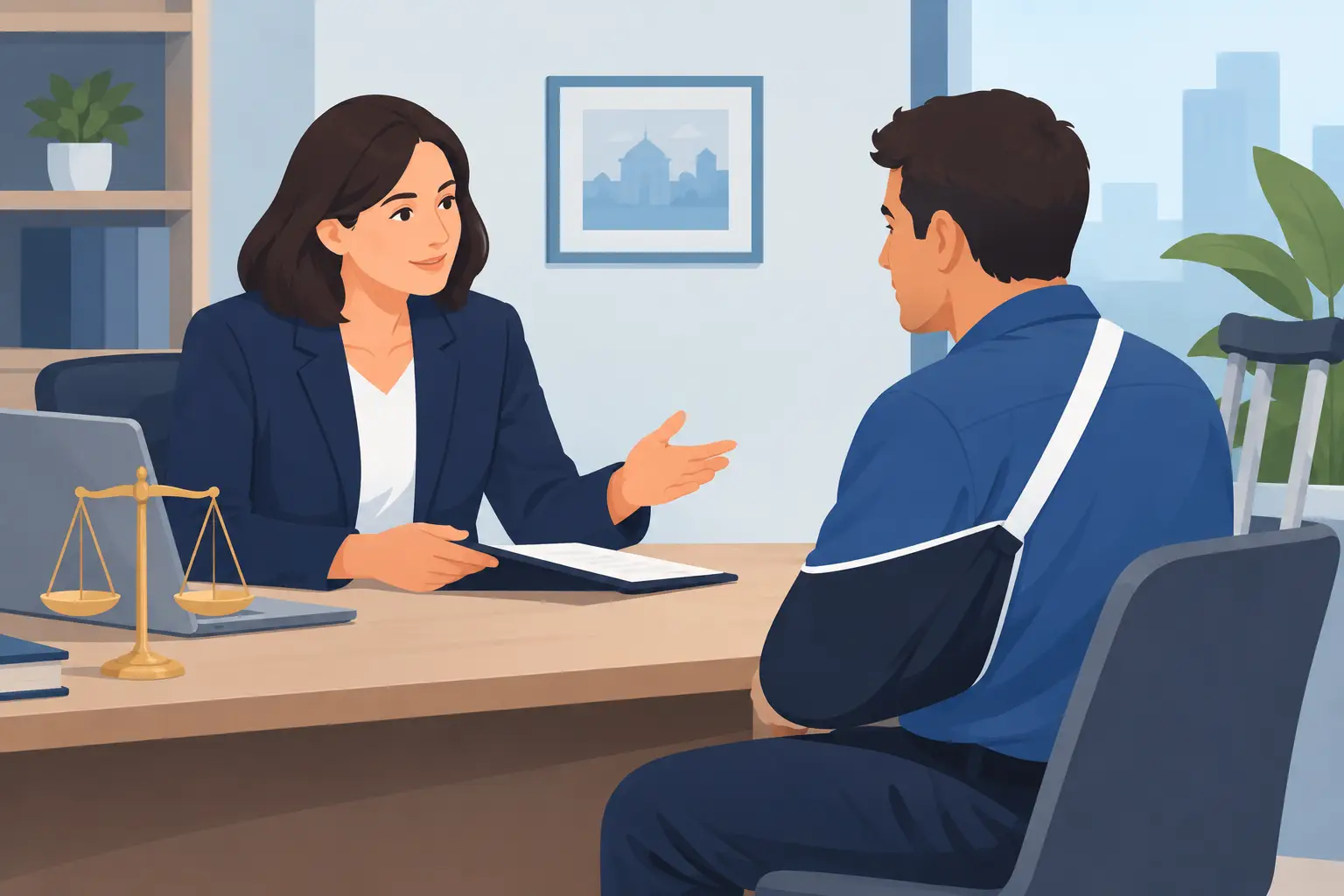
A crushed hand, a fall from scaffolding, a back injury from lifting, or a vehicle crash while making deliveries can stop a paycheck overnight. A workers compensation lawyer helps injured employees protect the benefits that may keep medical care and household finances from collapsing while they recover. When the injury is serious, the right legal review can also reveal claims beyond workers’ compensation.
Workers’ compensation is supposed to provide a direct path to medical treatment and wage benefits after a job-related injury. In practice, workers can face delayed authorizations, disputed medical findings, pressure to return before they are ready, and insurers looking for reasons to limit what they pay. You should not have to fight those battles alone while dealing with pain, appointments, and lost income.
What a Workers Compensation Lawyer Does
A workers compensation claim is not the same as a personal injury lawsuit. The claim generally seeks benefits through an employer’s workers’ compensation insurance system, rather than proving that the employer was negligent. A lawyer can help report the injury correctly, gather medical support, respond to insurance challenges, and pursue the benefits available under the law.
Those benefits may include authorized medical care, a portion of lost wages, payments for a permanent impairment, and other benefits depending on the state and the facts of the injury. The amount and duration are not automatic. They may turn on your work restrictions, medical evidence, prior conditions, earnings history, and whether the insurer accepts the injury as work-related.
An experienced attorney also sees the bigger picture. A workplace injury may involve a negligent property owner, general contractor, subcontractor, equipment manufacturer, driver, or outside company. Those parties can sometimes be held responsible in a separate personal injury case, even when workers’ compensation benefits are available.
That distinction matters because workers’ compensation often does not cover the full human cost of a catastrophic injury. A third-party lawsuit may seek damages for pain and suffering, full lost earning capacity, and other losses that workers’ compensation does not ordinarily provide.
When You Should Speak With a Workers Compensation Lawyer
You do not need to wait for a denial before getting answers. Early legal guidance can be especially valuable after a traumatic injury, surgery, hospitalization, or a diagnosis that could keep you out of work for months. Evidence does not stay fresh. Jobsite conditions change, surveillance footage can disappear, and witnesses may become difficult to locate.
You should strongly consider speaking with counsel if your claim was denied, your treatment was delayed or cut off, your doctor took you out of work, or the insurer says you can return to duty when you disagree. The same is true if your employer disputes how the accident happened, claims your injury is preexisting, or suggests that you were not working when you were hurt.
Serious construction accidents deserve immediate attention. Falls from ladders or scaffolds, falling-object injuries, trench accidents, saw injuries, electrocutions, burns, and equipment failures often involve more than one company. In New York, specific construction safety laws can provide powerful protections for workers hurt in gravity-related falls and falling-object incidents. The facts, the work being performed, and the parties controlling the site all matter.
A lawyer can also be essential when an injured worker is worried about retaliation. Employers generally cannot lawfully punish an employee simply for seeking workers’ compensation benefits, but fear is real when a family depends on the job. Document what happens, save texts and emails, and get advice before signing paperwork or accepting explanations that do not make sense.
The Difference Between a Workers’ Comp Claim and a Third-Party Case
Many injured workers are told, “You can only collect workers’ comp.” That is sometimes true, but it is not always the complete answer.
If a co-worker or employer caused the injury, workers’ compensation may be the primary remedy. But if an outside party created the dangerous condition, a separate claim may be possible. For example, a delivery driver struck by another motorist, a laborer injured by defective machinery, or a contractor hurt because a property owner failed to maintain safe conditions may have a third-party case.
These cases require prompt investigation. The legal team may need to preserve equipment, examine accident reports, identify every company at the site, review contracts, inspect the location, and consult engineers, safety professionals, and medical experts. Insurance companies and corporate defendants begin protecting themselves early. Injured people deserve representation that is prepared to do the same.
There are trade-offs. A third-party lawsuit can take time and may be aggressively contested. It also requires proof that another party was legally at fault. But for a worker facing permanent disability, chronic pain, lost career opportunities, or the death of a loved one, the potential recovery can be critical to long-term stability.
What to Do After a Workplace Injury
Your health comes first. Get medical care promptly and tell the provider that the injury happened at work. Follow treatment recommendations, keep copies of records when possible, and be clear about every symptom, even if an insurer tries to focus on only one body part.
Report the accident to a supervisor as soon as you can. Give accurate facts, but do not guess or minimize what happened. If you are physically able, take photographs of the scene, the equipment, your visible injuries, and any dangerous condition. Write down the names of witnesses and preserve texts, work orders, schedules, incident reports, and pay records.
Be careful with recorded statements, broad medical authorizations, and quick settlement offers. An insurer may sound helpful while gathering information to narrow or deny the claim. You can ask for time to understand the document and speak with a lawyer before agreeing to anything that affects your benefits or rights.
Deadlines matter in both New York and New Jersey, but the exact time limits depend on the type of claim and circumstances. Waiting can cost you evidence and, in some cases, the ability to pursue a claim. A free case evaluation can clarify the next step without adding another bill to your family.
Choosing Counsel for a Serious Workplace Case
Not every law firm has the resources or trial experience to handle a high-stakes workplace injury. A firm should be prepared to investigate immediately, invest in qualified experts, and take on insurers, contractors, property owners, and large companies that deny responsibility.
Ask whether the lawyer handles both workers’ compensation matters and third-party injury claims, or coordinates those issues carefully. Ask who will communicate with you, how the firm will investigate the accident, and whether it has experience with injuries like yours. Direct answers matter when your future is on the line.
The Cakani Law Firm, P.C. represents injured people and families in New York and New Jersey in complex workplace and construction injury litigation. The firm has recovered more than $300 million for clients and brings the resources needed to build expert-driven cases, while giving clients the direct attention they deserve. There are no attorney fees unless there is a recovery.
A workplace injury can leave you feeling replaceable to an insurer and overwhelmed by a system that was supposed to help. You are neither. Get clear answers early, protect the evidence, and give yourself the chance to recover with your rights fully protected.

